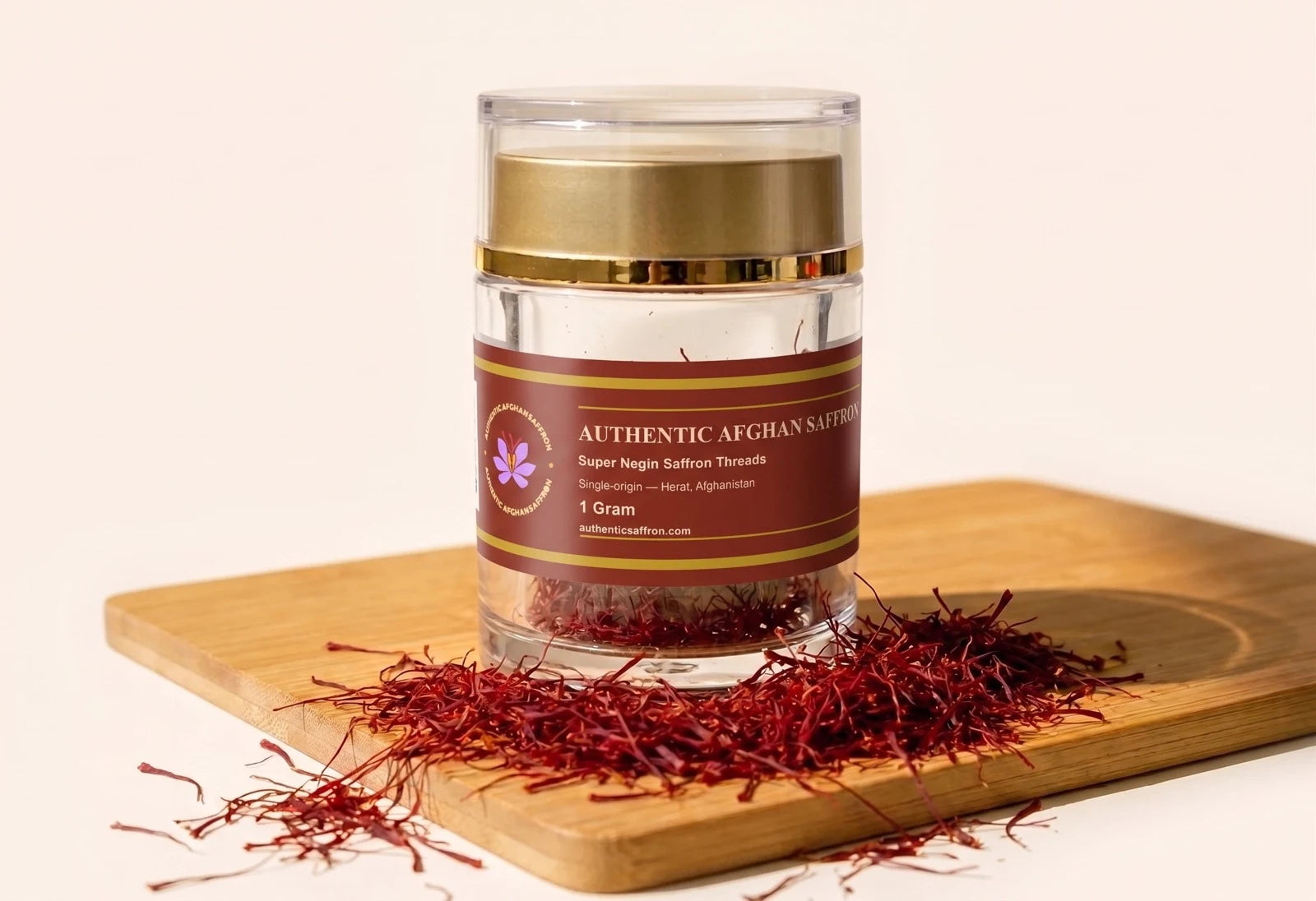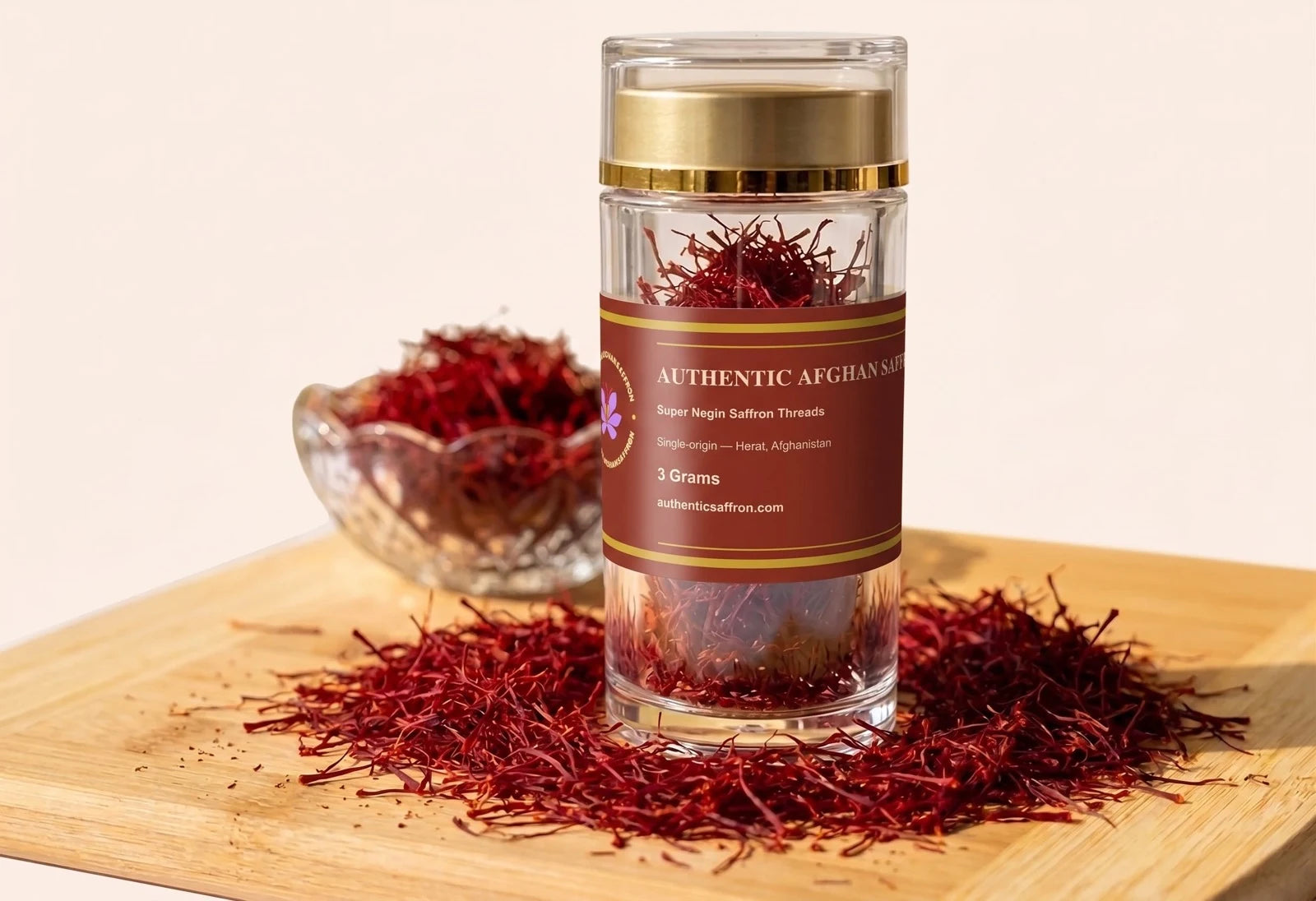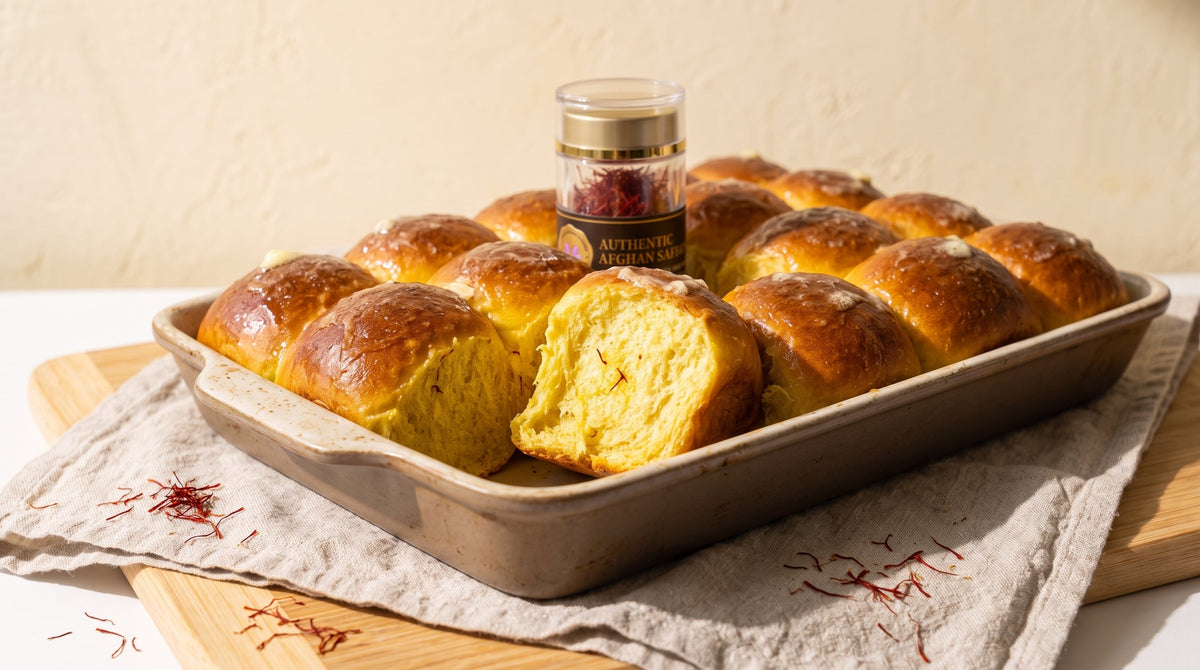
Saffron dinner rolls are soft pull-apart rolls built on a tangzhong milk paste, coloured and scented with 0.40 g of saffron — about 100 threads — bloomed in warm milk. The batch makes twelve rolls baked shoulder to shoulder in a 9x13 pan. Around three hours start to finish, most of it rising.
Why put saffron in a dinner roll?
Let us be straight about provenance: this is not a heritage bake. Dinner rolls are an American table bread, and nobody’s grandmother was putting saffron in them. The pairing works anyway, and it is worth explaining why rather than dressing it up as tradition.
An enriched roll is mostly milk, butter and egg. Those three things are the exact background saffron sits best against — the same logic behind risotto Milanese and Swedish Advent buns. Saffron gives you a honeyed, faintly hay-like aroma and a warm gold crumb that butter alone cannot produce.
The tangzhong does the other half of the work. Cooking a small portion of the flour with milk into a paste gelatinises the starch so it holds more water, and the finished roll stays soft for two days instead of going stale overnight.
How much saffron does a batch of twelve need?
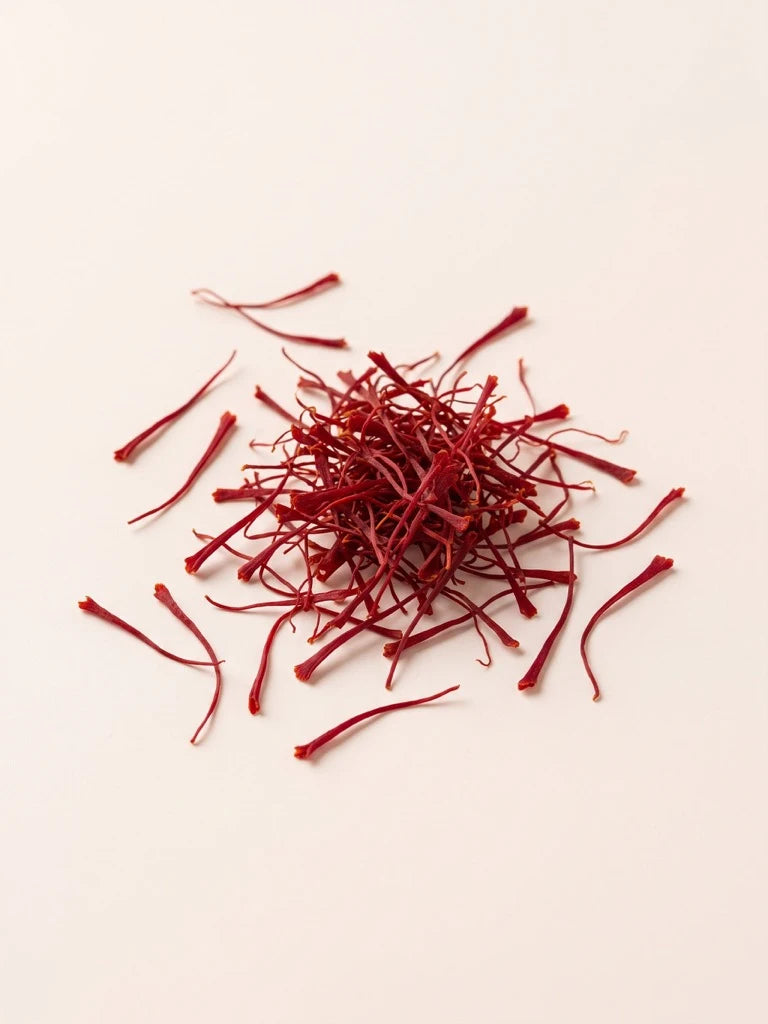
0.40 g, which is roughly 100 threads. That is half what a batch of lussekatter takes, because these rolls are savoury-leaning and you want saffron as a presence rather than the headline. Below about 0.12 g you get colour and very little else.
Bloom the threads first. Crumble them between dry fingers into a small bowl, pour over 1/2 cup of whole milk warmed to about 150°F (65°C) — steaming, no bubbles breaking the surface — cover it, and leave it 15 to 20 minutes. The milk should go a deep orange-gold, not pale yellow. If it is pale after twenty minutes, the threads are old.
Two things to avoid. Do not boil the milk: heat above a simmer drives off safranal, the compound doing most of the aroma work, and leaves you with dye. And do not add the bloom to the dough hot, because yeast starts dying somewhere north of 120°F. Extract first, cool second. If you want the reasoning in more depth, our note on why warm water beats hot water covers it, and our whole Herat stigmas are the form to buy for this — you can see what you are steeping.
What goes into the dough?
- 0.40 g saffron (about 100 threads)
- 1 cup (240 ml) whole milk, divided
- 3 tbsp (25 g) bread flour, for the tangzhong
- 3 cups (400 g) bread flour
- 3 tbsp (40 g) granulated sugar
- 7 g (2 1/4 tsp) instant yeast
- 1 1/2 tsp fine sea salt
- 1 large egg, at room temperature
- 6 tbsp (85 g) unsalted butter, soft, cut into cubes
- 1 tbsp (15 g) butter, melted, to finish
- Flaky sea salt, to finish
How are they made?
- Bloom the saffron. Crumble the threads into a small bowl. Warm half the milk (1/2 cup, 120 ml) to about 150°F (65°C), pour it over, cover, and leave for 15 to 20 minutes. Set it aside to cool to lukewarm.
- Cook the tangzhong. Whisk the 3 tbsp of bread flour into the remaining 1/2 cup of milk in a small saucepan until smooth. Cook over medium-low, whisking constantly, for 2 to 3 minutes, until it thickens into a loose paste that holds the mark of the whisk. Scrape it into the mixer bowl and let it cool for 10 minutes.
- Mix the dough. Add the saffron milk and its threads, the egg, sugar, yeast, the 3 cups of flour and the salt to the tangzhong. Mix on low with a dough hook for 2 minutes to bring it together, then medium-low for 5 minutes.
- Work in the butter. With the mixer running, add the soft butter a cube at a time, waiting for each to disappear before the next. Knead 6 to 8 minutes more. The dough is ready when it clears the sides of the bowl, feels tacky rather than sticky, and stretches thin enough to see light through without tearing.
- First rise. Cover and leave somewhere warm for 60 to 90 minutes, until doubled. Butter and sugar slow yeast down, so judge by volume, not the clock.
- Shape twelve rolls. Turn the dough out and divide it into 12 pieces of about 75 g. Roll each into a tight ball against an unfloured counter with a cupped hand — the slight drag is what builds the surface tension. Arrange them in a buttered 9x13 inch pan, four along and three across, with a finger’s gap between.
- Second rise. Cover loosely and prove 45 to 60 minutes, until the rolls are touching, puffed, and slow to spring back when pressed. Heat the oven to 350°F (175°C) partway through.
- Bake. Bake 22 to 25 minutes, until the tops are deep gold and the centre roll reads 190°F (88°C). If they are colouring fast at 15 minutes, tent the pan with foil.
- Butter and rest. Brush the hot tops with melted butter, scatter a little flaky salt, and leave them in the pan for 10 minutes before pulling them apart. They keep two days in a sealed bag and reheat well at 300°F.
Where does this normally fail?
Extra flour at the bench is the most common mistake, and the most damaging. This dough is meant to feel slightly tacky. Every tablespoon kneaded in to make it behave costs you softness in the finished crumb. If it is unmanageable, chill it for 20 minutes rather than flouring it.
Underproving is the second. Rolls that go into the oven still firm and springy come out dense and tight, with a pale seam where they should have knitted together. Press one with a fingertip: the dent should fill back slowly and not quite completely.
Then there is the saffron itself. Threads dropped straight into the dough without blooming release almost nothing — you will find them intact in the baked crumb as red specks in an otherwise cream-coloured roll. The bloom is not an optional flourish; it is the step that gets the colour and aroma out of the thread and into the liquid.
Finally, be honest about your saffron before you blame the recipe. Threads left open in a warm cupboard for two years bloom weakly no matter how good the technique. Our guide to storing saffron properly is short and it matters more than most people expect.
Frequently asked questions
Can I make these without the tangzhong?
Yes. Skip step two, use the full cup of milk for blooming and mixing, and add the 3 tbsp of flour to the main flour. You will get a good roll. It will simply be drier by the following afternoon, because the gelatinised starch is what holds the extra water in the crumb.
Will these actually taste of saffron, or just look yellow?
At 0.2 g across twelve rolls you get a clear but restrained flavour — honeyed and slightly savoury, most obvious in the first bite of a warm roll. If you want it to be the main event, take it to 0.3 g. If you get colour and nothing else at 0.2 g, the problem is thread quality or a bloom that was too short or too hot.
Can I shape them the night before?
Yes, and it makes the morning easy. Shape the rolls into the pan, cover tightly, and refrigerate for up to 16 hours instead of the second rise. Take the pan out an hour before baking to let them finish proving at room temperature, then bake as written and add two or three minutes.
Does it have to be bread flour?
All-purpose works, but the rolls will be softer and slightly squatter. Bread flour’s extra protein gives the enriched dough enough structure to hold a tall, domed roll after all that butter goes in. If you only have all-purpose, reduce the milk by about a tablespoon.
Read next
- Saffron buns (lussekatter), the sweet version of the same enriched dough, at double the saffron.
- Saffron compound butter to serve alongside, which is the easiest way to double the effect.
- Blooming liquids compared, on when milk beats water and when it does not.
- Cooking with saffron, our overview of doses by dish type.