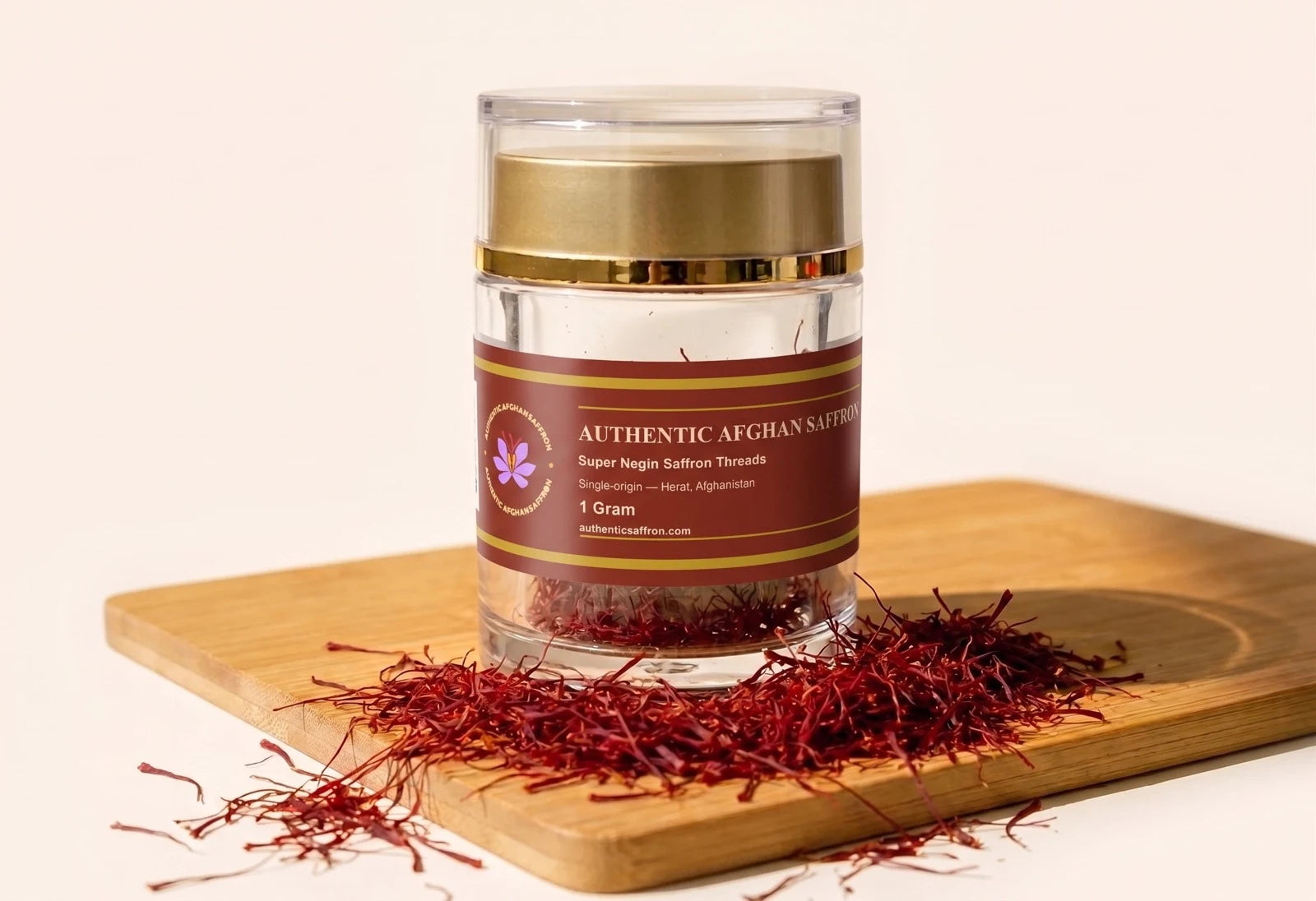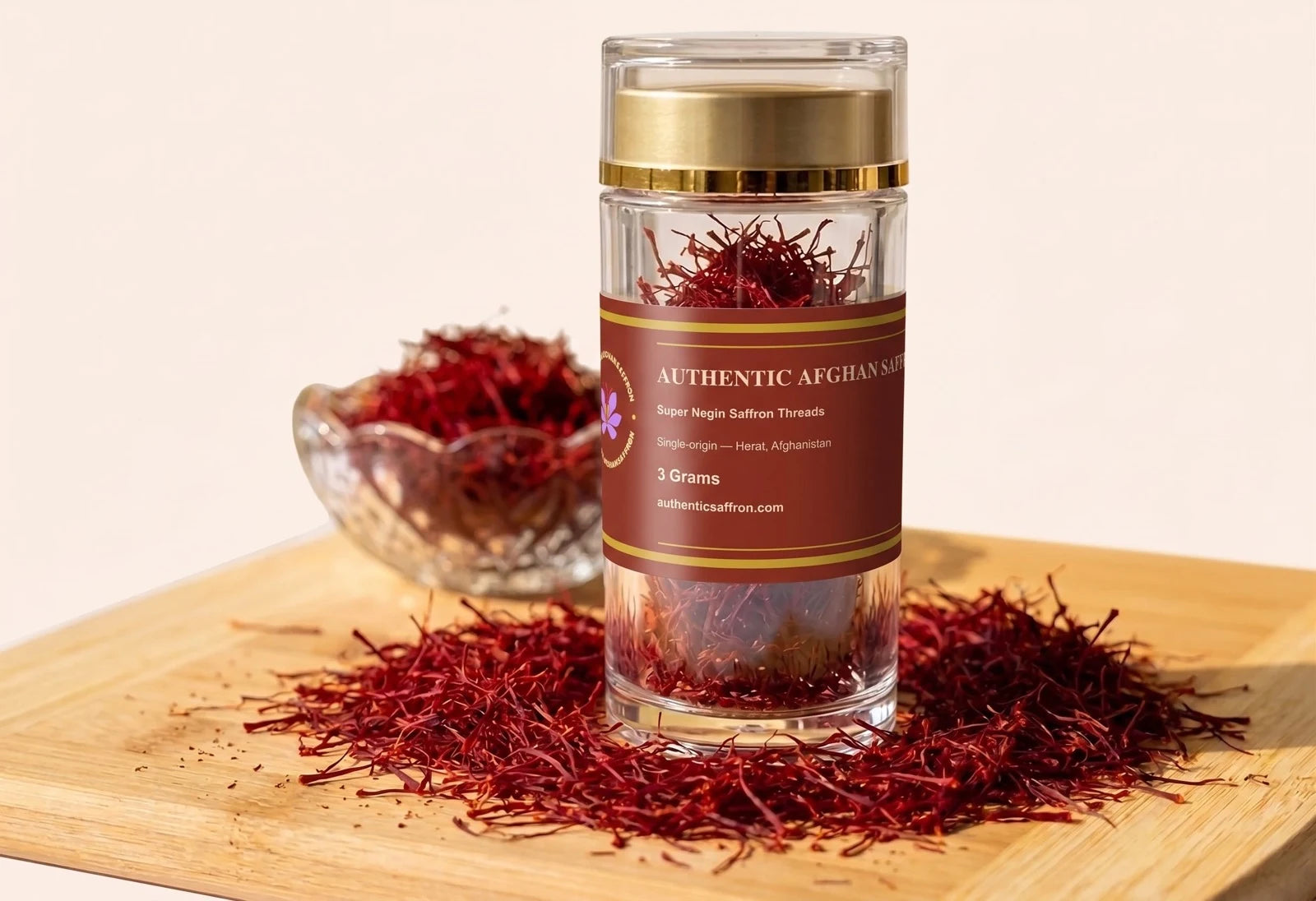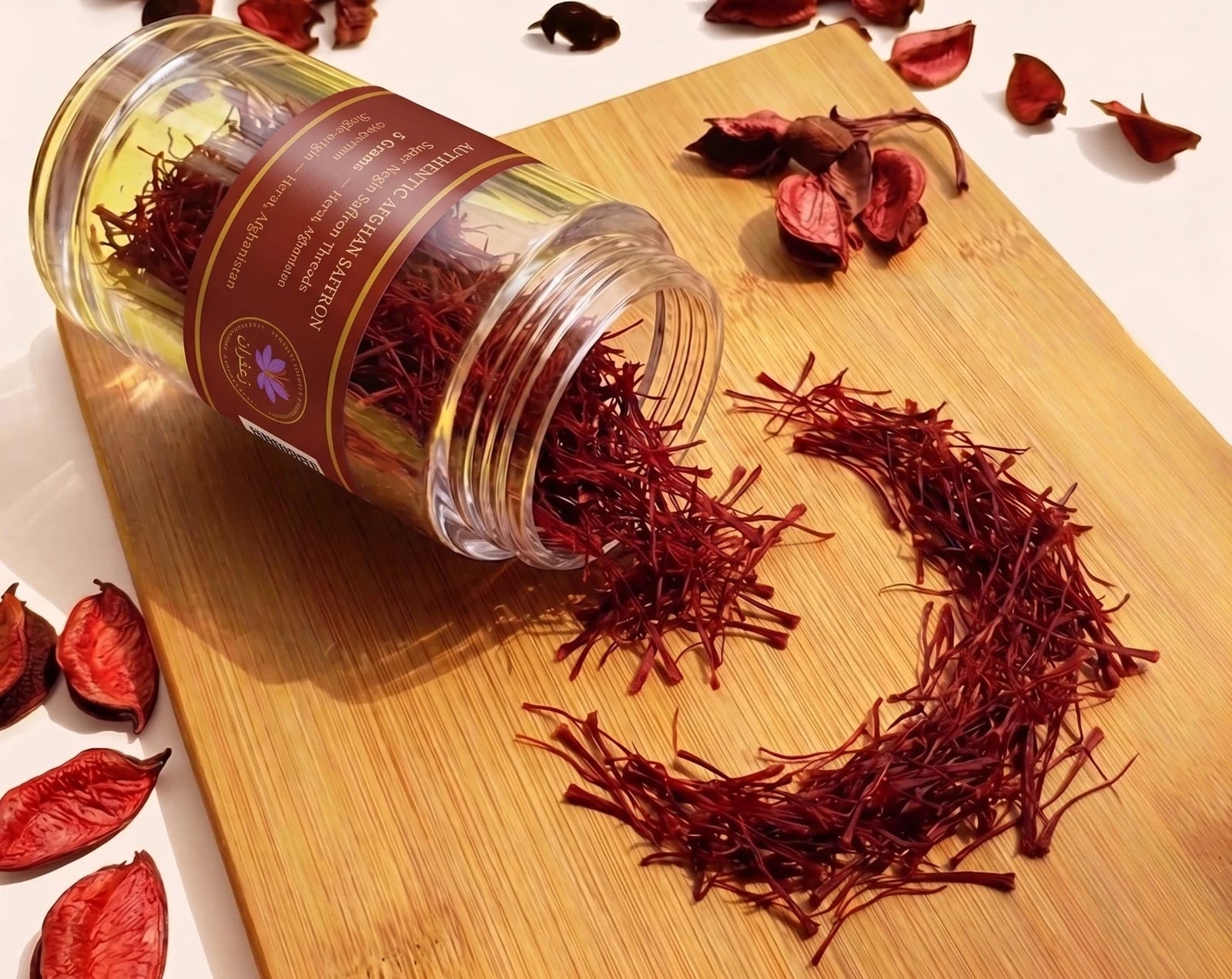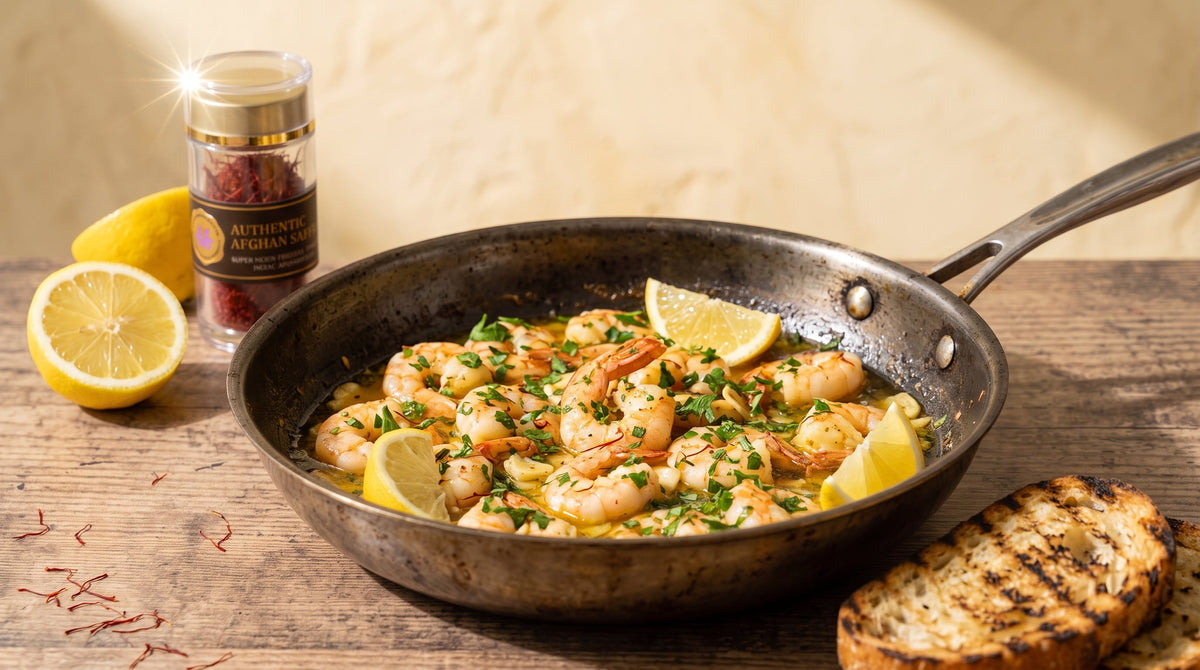
A saffron shrimp recipe works best when the saffron goes into the sauce rather than onto the shrimp. Bloom 30 threads (0.12 g) in warm water, sear the shrimp fast in a wide skillet, then build a cold-butter pan sauce around them off the boil. One pan, about thirty minutes.
Scampi, in Italy, are langoustines. The dish most American cooks mean by the word — shrimp, garlic, wine, butter, a hard squeeze of lemon — grew up in Italian-American kitchens where langoustines were nowhere to be found and shrimp were. It is a good dish with a slightly confused name.
Saffron is not part of that history. What follows is a deliberate addition, and it earns its place for reasons worth spelling out before you spend threads on it.
Why put saffron in shrimp scampi?
Garlic butter sauces have one structural weakness: they are all foreground. Garlic, wine and lemon shout at the same pitch, and after four bites the sauce stops telling you anything new. Saffron sits underneath all three, hay-like and savoury against shellfish, with just enough bitterness to give the butter something to push against.
There is precedent a short way along the same coastline. Shellfish and saffron have been paired for centuries in Catalan and Provençal cooking — suquet, zarzuela, the rouille that goes on the toast. Shrimp are sweet and slightly mineral, and saffron flatters both without covering either.
The visual difference is not trivial either. A standard scampi sauce is beige; this one goes amber, and the colour clings to the pasta rather than pooling under it. For the reasoning behind pairings like this, our notes on cooking with saffron cover what the spice supports and what it fights.
How much saffron does this need?
For four servings, use about 30 threads, roughly 0.12 g on a scale that reads to a hundredth of a gram. That is a moderate hand on purpose: saffron is here to support the garlic and butter, not to take over. Push past 50 threads and the sauce starts to taste medicinal against the lemon.
Bloom in water, not wine. Bring 3 tablespoons to about 150°F (65°C) — steaming, with no bubbles breaking the surface — and pour it over the threads. Fifteen minutes is enough, twenty is better. Boiling water strips the volatile aromatics and leaves you paying thread prices for food colouring. Wine is too acidic to extract properly, so it goes into the pan later on its own terms.
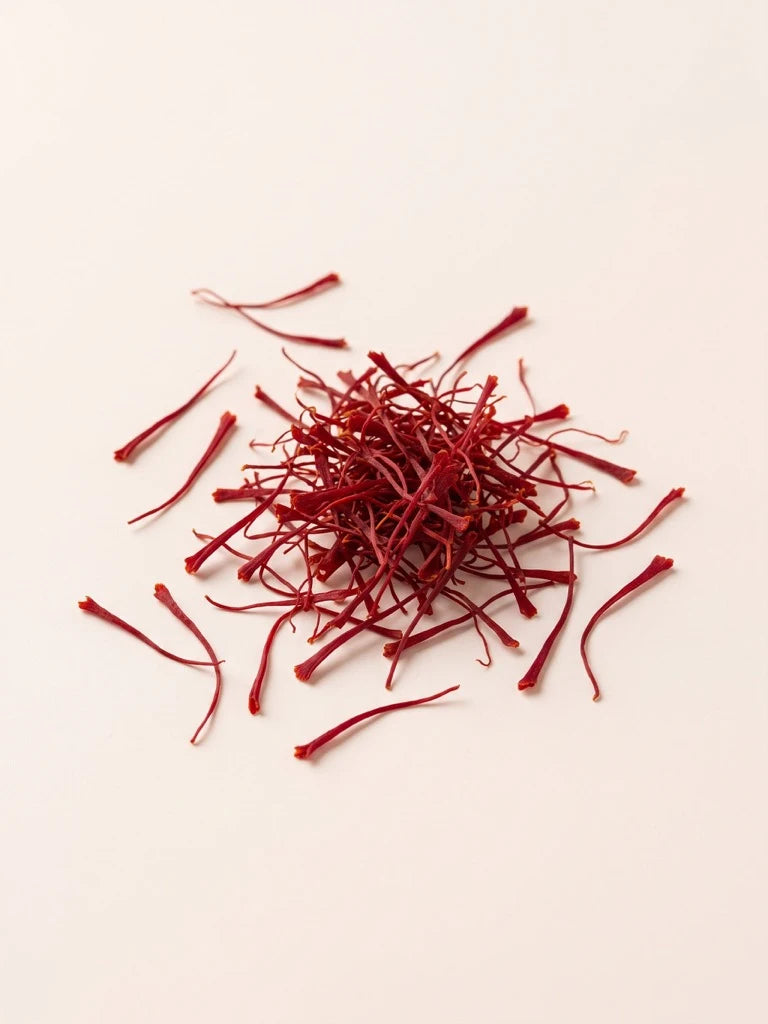
Thread quality decides how far 30 threads actually go. Long, deep red, all-red stigmas with no pale yellow style attached carry more pigment per thread, which is how our Super Negin grade is cut. If you have never timed a bloom, the walk-through in how to bloom saffron properly is worth five minutes.
What goes in the pan?
- 1 lb (450 g) large shrimp, 16/20 count, peeled and deveined
- About 30 saffron threads (0.12 g)
- 3 tbsp water, warmed to about 150°F (65°C)
- 12 oz (340 g) linguine, or a loaf of crusty bread to serve
- 2 tbsp olive oil
- 6 garlic cloves, sliced thin
- 1/4 tsp red pepper flakes
- 1/2 cup (120 ml) dry unoaked white wine
- 4 tbsp unsalted butter, cut into cubes and kept cold
- 1 lemon: 2 tsp finely grated zest and 1 tbsp juice
- 1/4 cup chopped flat-leaf parsley
- Fine sea salt and freshly ground black pepper
How do you cook it?
- Bloom the saffron. Warm 3 tablespoons of water to about 150°F (65°C), steaming but not bubbling, and pour it over the threads in a small bowl. Leave it for 15 minutes while you prepare everything else. The water should turn deep amber and smell faintly of hay.
- Dry and season the shrimp. Pat the shrimp thoroughly dry and season them lightly with salt. Damp shrimp steam instead of searing, and the water they release thins the sauce later.
- Cook the pasta. Bring a large pot of well-salted water to the boil and cook the linguine one minute short of the package time. Reserve 1 cup of the cooking water, then drain. Skip this step if you are serving with bread.
- Sear the shrimp. Heat the olive oil in a 12-inch skillet over medium-high until it shimmers. Lay the shrimp in a single layer, working in two batches if they touch, and cook 60 to 90 seconds a side until the edges are opaque. Move them to a plate; they will finish in the sauce.
- Soften the garlic. Turn the heat down to medium-low and add the garlic and pepper flakes to the same pan. Cook for 60 to 90 seconds, stirring, until the slices are pale gold at the rim. Browned garlic turns bitter and there is no way back.
- Reduce the wine. Pour in the wine, raise the heat to medium and scrape the base of the pan clean. Let it reduce by about half, 2 to 3 minutes, until it smells of wine rather than raw alcohol.
- Build the saffron butter. Lower the heat to its lowest setting and add the bloomed saffron with its threads. Add the cold butter two cubes at a time, swirling the pan constantly, waiting until each addition disappears before the next goes in. The sauce should thicken slightly and turn glossy amber. If it bubbles hard it will split.
- Finish and serve. Return the shrimp and any juices from the plate, then add the lemon zest, lemon juice and parsley. Toss with the drained linguine and a splash or two of pasta water until the sauce coats every strand, about 30 seconds. Taste for salt and serve straight away.
Where does scampi usually go wrong?
Overcooked shrimp, first and always. A shrimp that has curled into a tight closed O is already rubbery. You want a loose C — the head end and tail end still a thumb-width apart. That happens about 90 seconds before most people take the pan off the heat.
A crowded pan is the second failure. One pound of 16/20 shrimp needs a full 12 inches of surface to sear rather than stew. If the shrimp are touching, the pan temperature crashes, they release water, and you end up boiling them in their own liquid.
Split sauce is the third. Butter emulsifies into the reduced wine only while the liquid stays below a simmer. Let it boil and the fat separates into an oily slick. If that happens, pull the pan off the heat, add a tablespoon of cold water and swirl hard until it comes back together.
Last, there is such a thing as too much lemon. Sharp acid flattens saffron faster than anything else in the kitchen. One tablespoon of juice, off the heat, is plenty. Put wedges on the table for anyone who disagrees.
Frequently asked questions
Can I use frozen shrimp?
Yes, and often you should. Most shrimp at the counter were frozen at sea and thawed for display, so a bag from the freezer case is frequently fresher. Thaw them in cold water for 15 minutes, then dry them harder than feels necessary; thawed shrimp hold a lot of water.
Does the wine actually matter here?
It matters more than usual, because there is so little else in the sauce. Use something dry and unoaked: Vermentino, Picpoul, a lean Sauvignon Blanc. Oaked Chardonnay pushes vanilla into the pan and buries the saffron. Without wine, use 1/3 cup of light shellfish broth and let the lemon do the brightening.
Can I bloom the saffron in the wine instead?
Not effectively. Blooming relies on warm water pulling the water-soluble pigment out of the thread, and wine is both cold and acidic, which slows extraction badly. Bloom in warm water, then add the bloom to the reduced wine in the pan. Same sauce, far more colour.
What can I serve this on besides pasta?
Thick toasted sourdough, because the sauce is the point and bread chases it better than anything. Plain rice works too, and if you have threads to spare, a bowl of saffron rice under the shrimp doubles the colour without doubling the effort.
Read next
- Saffron fish stew — the same flavour logic in a deeper, longer-cooked form.
- Saffron aioli to spoon on the bread you serve alongside.
- What saffron loves and what it fights, including why acid needs a light hand.
- How much saffron do you need for thread counts across other dishes.