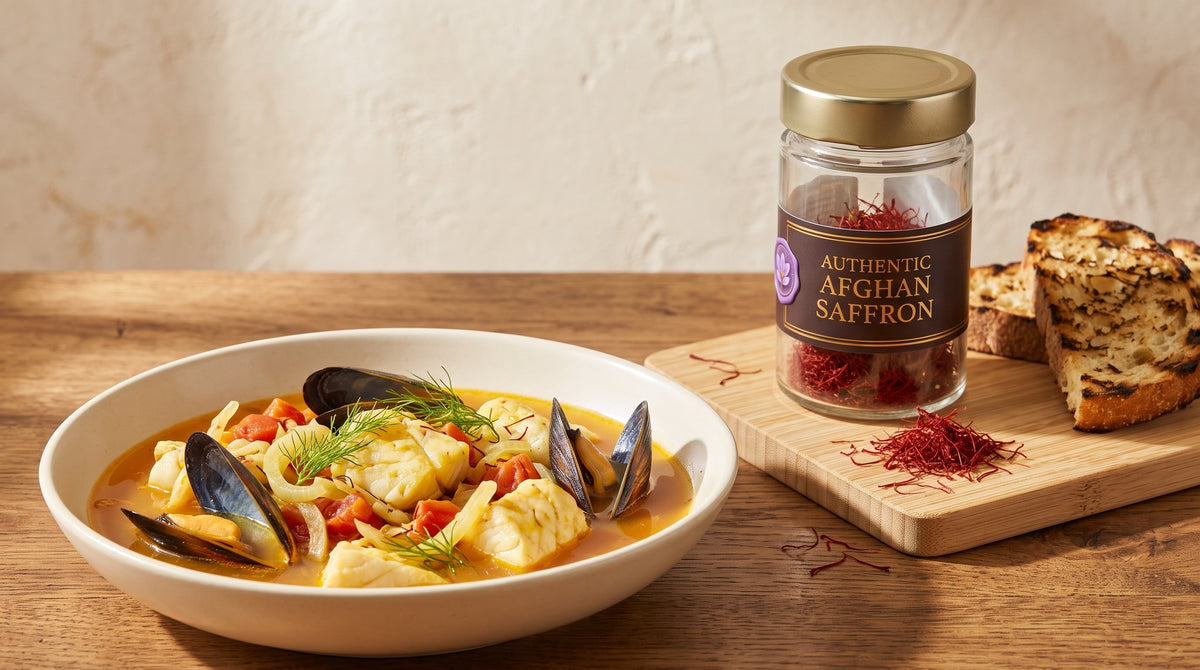
Build the broth first and the fish barely cooks at all. A saffron fish stew wants 40 threads (0.16 g) bloomed in warm stock, a base of fennel, leek and tomato simmered for twenty minutes, and firm white fish slipped in for the last six. Serves four, one pot.
Almost every coastline in the Mediterranean has a version of this: bouillabaisse in Marseille, suquet along the Catalan coast, brodetto on the Adriatic. They disagree about tomato, about garlic, about whether potatoes belong. They agree about saffron.
That agreement is the useful part. Saffron has not been bolted on here to justify a price tag; it is doing a specific job, and once you know the job you can judge your own pot.
Why does saffron belong in fish stew?
Fish broth is thin. Next to a beef or chicken stock it carries little fat and little collagen, so it has almost nothing to hold flavour in the mouth. Saffron helps because crocin, its main pigment, is water-soluble: it disperses through the whole pot instead of riding in a fat layer at the top, so every spoonful tastes like the last.
Then there is balance. Fennel and leek both cook down sweet, and canned tomato brings acid. Saffron’s mild bitterness sits between them and stops the broth reading as candied or sharp. Cook the same pot without it once and the flatness is obvious.
Colour matters more here than usual because the broth is the point. A good pot goes burnt orange and stains the bread. Tired threads give a weak yellow that looks like turmeric, which is normally a storage fault rather than a quantity one — see our notes on storing saffron.
What is the right amount of saffron?
Forty threads for four servings, roughly 0.16 g. That is more than a rice dish of the same size needs, because there are three cups of stock and a can of tomatoes to colour and a twenty-minute simmer costs you some aroma.
Warm 1/3 cup of stock to about 150°F (65°C). Steam should rise and the surface should stay still; if bubbles are forming it is too hot, and boiling drives off the volatile compounds you paid for. Pour it over the threads and leave 20 minutes. The liquid runs from pale straw to deep orange in the first five, then keeps going.
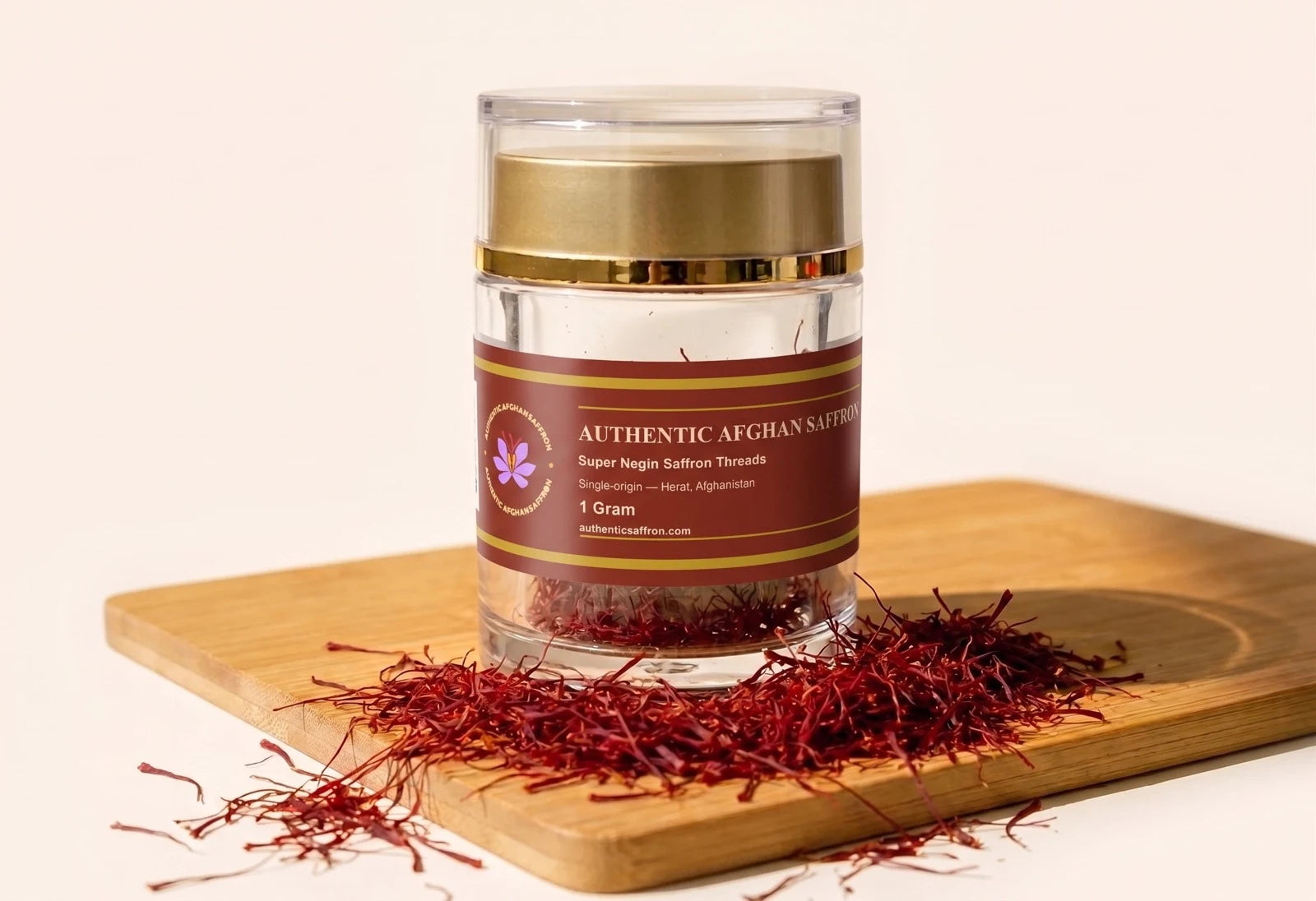
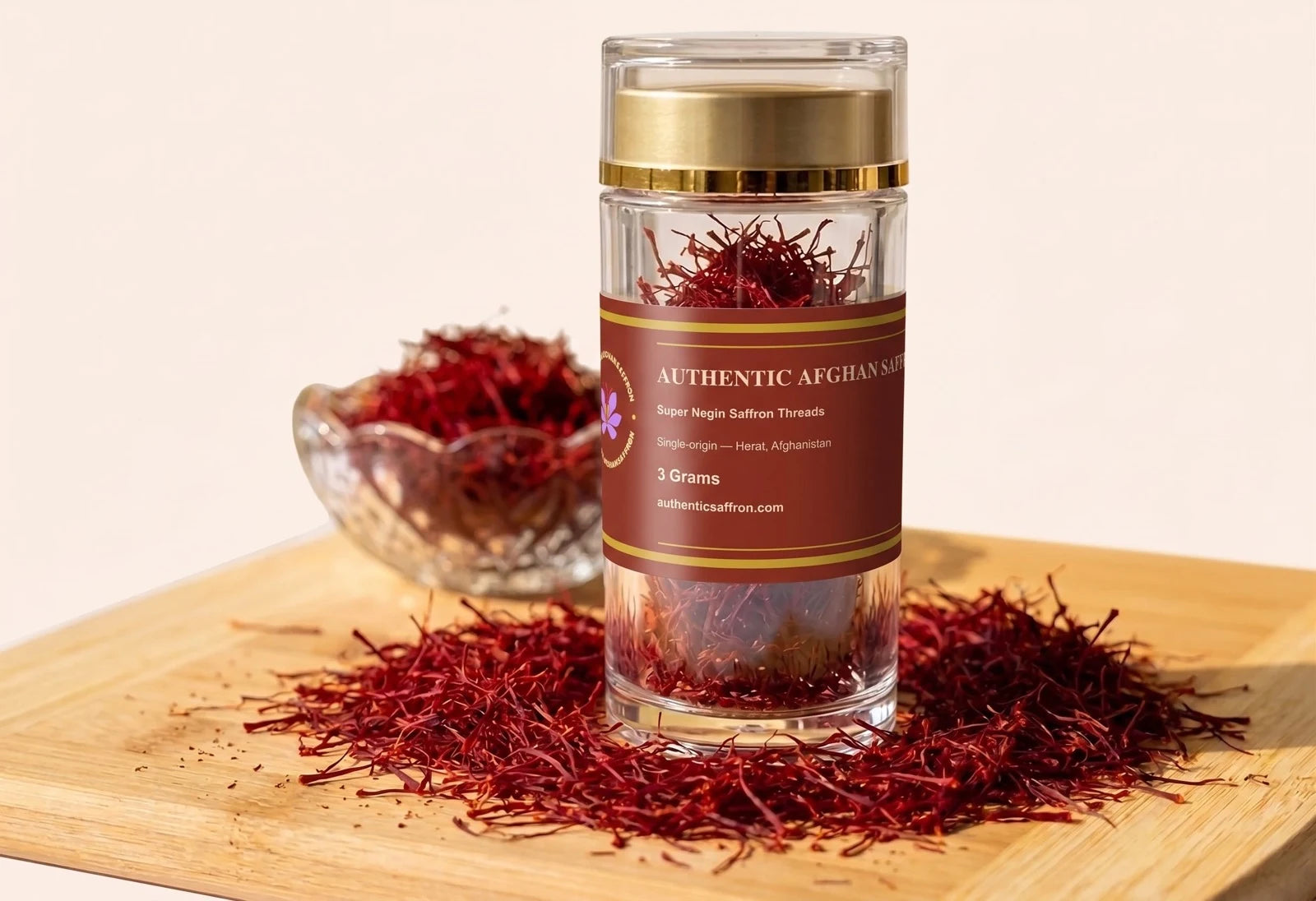
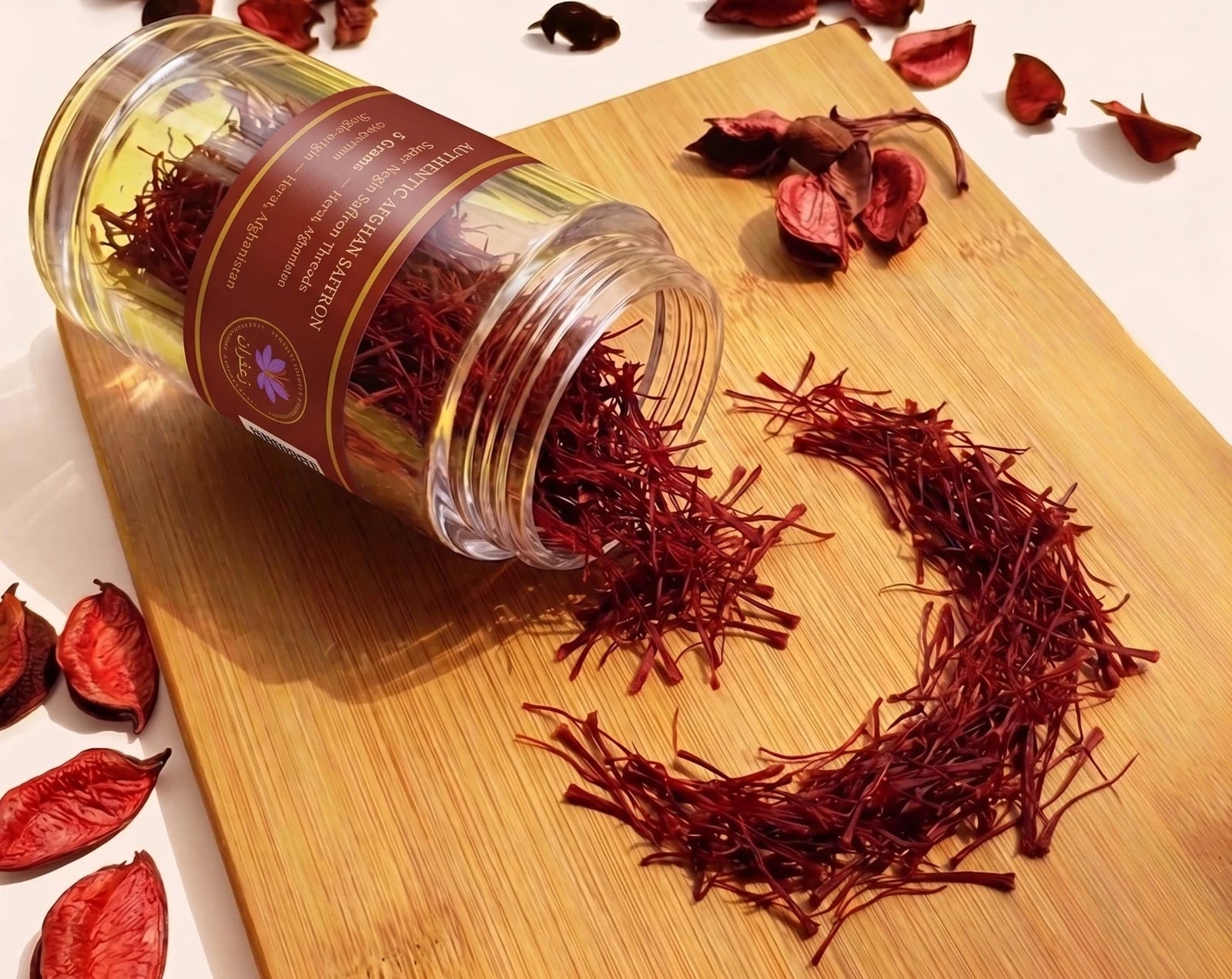
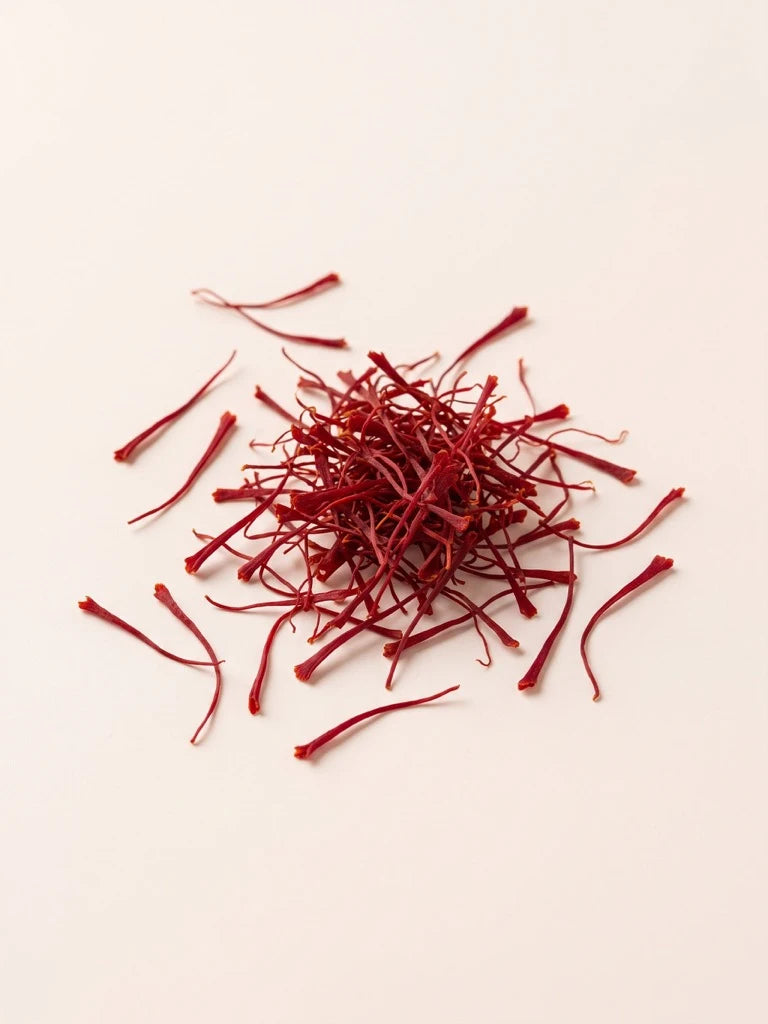
Split the bloom. Three-quarters goes into the broth early, where it marries with the fennel and tomato; the last quarter goes in off the heat at the end, threads and all, and that is what you smell when the bowl reaches the table. Long, unbroken all-red threads bloom faster and further, which is the argument for the grades in our saffron range.
What fish should you buy?
- 1.5 lb (680 g) skinless firm white fish, cut into 2-inch pieces (halibut, cod loin, monkfish, or a mix)
- 1/2 lb (225 g) mussels, scrubbed and debearded (optional)
- About 40 saffron threads (0.16 g)
- 1/3 cup (80 ml) fish stock, warmed to about 150°F (65°C), for blooming
- 3 tbsp olive oil
- 1 large leek, white and pale green parts only, halved and sliced thin
- 1 fennel bulb, cored and sliced thin, fronds reserved
- 4 garlic cloves, sliced
- 1 tsp fennel seed, lightly crushed
- 2 wide strips orange zest, pared with a vegetable peeler
- 1/4 tsp red pepper flakes
- 1 cup (240 ml) dry white wine
- One 14.5 oz (410 g) can whole peeled tomatoes, crushed by hand
- 3 cups (720 ml) fish stock or bottled clam juice
- 1 bay leaf
- Fine sea salt
- Crusty bread and lemon wedges, to serve
How do you build the stew?
- Bloom the saffron. Warm 1/3 cup of the stock to about 150°F (65°C), steaming with a still surface, and pour it over the threads. Leave it 20 minutes. The liquid should end up deep orange and smell of hay and honey rather than of nothing.
- Salt the fish. Pat the pieces dry, salt them lightly and leave them uncovered in the refrigerator while you build the broth. Twenty minutes of dry salt firms the flesh enough to hold together in the pot.
- Sweat the vegetables. Warm the olive oil in a 5 to 6 quart Dutch oven over medium-low heat. Add the leek, fennel and a pinch of salt and cook 10 to 12 minutes until soft and translucent. Do not let anything colour; browning makes the broth taste roasted rather than clean.
- Add the aromatics. Stir in the garlic, fennel seed, orange zest and pepper flakes and cook for 1 minute, until the garlic smells sweet rather than raw.
- Reduce the wine. Pour in the wine, raise the heat to medium-high and boil for 4 to 5 minutes until it has reduced by about half and no longer smells sharp.
- Simmer the broth. Add the crushed tomatoes, remaining stock, bay leaf and three-quarters of the bloomed saffron with its threads. Simmer uncovered for 20 minutes, with only the occasional bubble breaking the surface. Taste and salt firmly; the broth should taste slightly over-seasoned on its own.
- Open the mussels. Raise the heat to medium, add the mussels, cover the pot and cook for 3 to 4 minutes until they open. Discard any that stay shut. Skip this step if you are leaving the mussels out.
- Poach the fish. Turn the heat down until the surface barely moves. Slip the fish in as a single layer, cover, and cook for 5 to 7 minutes without stirring. It is done when a paring knife slides into the thickest piece with no resistance and the flakes part cleanly.
- Finish off the heat. Take the pot off the burner and stir in the remaining bloomed saffron and a handful of chopped fennel fronds. Let it stand for 2 minutes, then ladle into warm bowls and serve with bread and lemon wedges.
What ruins a fish stew?
Boiling. Above a bare simmer the muscle proteins contract hard and squeeze out water, which is why an overcooked piece is both dry and sitting in a puddle. Once the fish is in, you want bubbles only at the edge of the pot and the lid on, so the heat arrives as steam.
Pieces cut too small. Anything under 2 inches overcooks before the centre warms through and falls apart when you ladle.
Spending all the saffron at the start. Twenty minutes of simmering holds the colour well enough, but the lighter aromatics leave with the steam. Holding a quarter back is the cheapest upgrade available; there is more on the mechanics in our guide to cooking with saffron.
And under-salting. Fish is bland and the broth carries the dish. Season before the fish goes in, taste again at the end, and expect to add more than feels comfortable.
Frequently asked questions
Which fish holds up best in a stew?
Thick, dense fillets: halibut, cod loin, monkfish, hake, sea bass, cut at least 2 inches across. Avoid thin flatfish like sole or tilapia, which shred within a minute, and avoid salmon, whose oil takes over the broth. A mix of two firm species gives the best texture.
Can I make the broth in advance?
You should. Stop after the twenty-minute simmer, cool the broth and refrigerate it for up to two days; the fennel and tomato settle into each other. Reheat to a bare simmer, then poach the fish and add the reserved saffron. Never reheat a stew with the fish already in it.
Do I have to use orange zest?
No, though try it once before deciding. Pared orange peel is a standing habit along the Provençal coast, and its bitterness runs parallel to saffron’s rather than fighting it. Leave it out if you dislike it and add extra fennel fronds at the end instead.
What if I only have powdered saffron?
Powder colours the broth but costs you all control: you cannot see what you bought, and you cannot judge a bloom by eye. If it is what you have, stir a scant 1/8 teaspoon into the warm stock and skip the finishing addition. The reasoning is in threads versus powder.
Read next
- Saffron shrimp scampi — the fast version of the same shellfish-and-saffron idea.
- How to bloom saffron properly, including why 150°F is the ceiling.
- Why Herat saffron and what the growing conditions do to thread strength.
- Saffron aioli to spread on the bread, in place of a classic rouille.