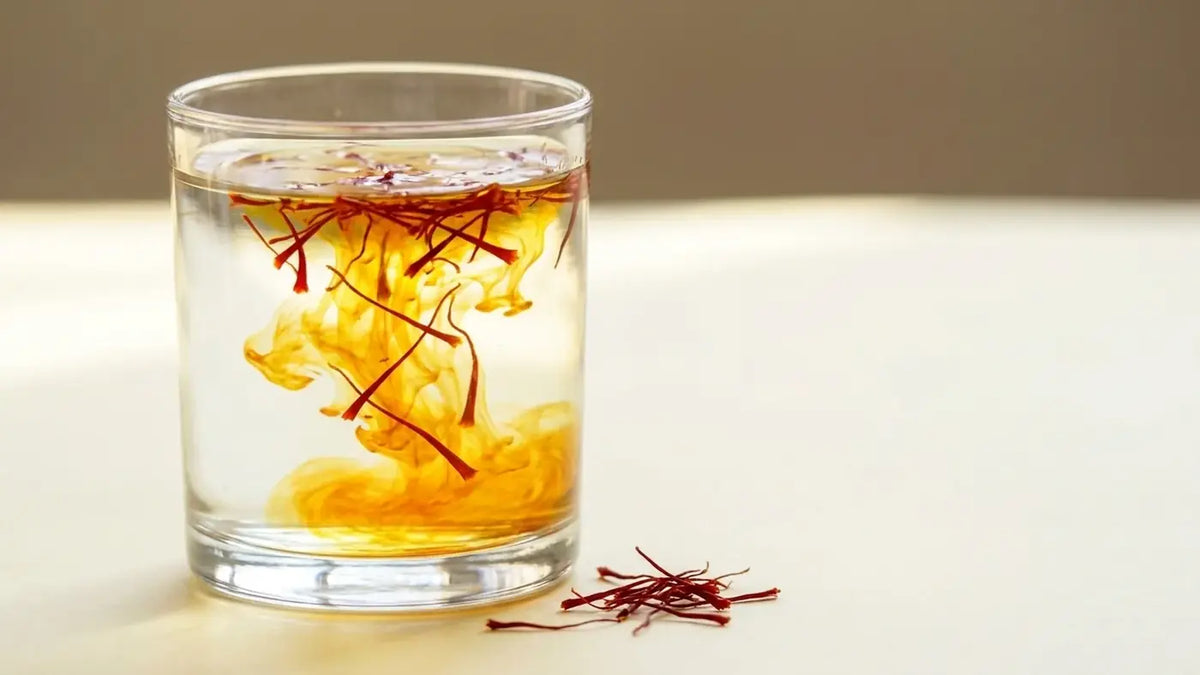
Saffron eye health research is a small field, concentrated on age-related macular degeneration and built mostly from short studies of a few dozen people using around 20mg of saffron a day. Some report measurable changes in retinal function. None is large enough to settle the question, and none tested saffron used as a seasoning.
This is research, not medical advice. Speak to a doctor before using saffron therapeutically, and never in place of an eye examination.
Which eye conditions has saffron been studied in?
Four areas account for nearly all of the published human work, and they are at very different stages.
- Age-related macular degeneration. The most studied, including small randomised and crossover designs measuring retinal function.
- Early diabetic retinopathy and diabetic macular changes. A handful of small trials, plus a larger body of animal work.
- Glaucoma and intraocular pressure. A few short studies, generally reporting modest pressure changes, with mixed results.
- Screen-related eye strain and general visual fatigue. The thinnest evidence of the four, and the one most often over-claimed in marketing.
The interest has a plausible starting point. Crocin, the pigment behind saffron’s colour, is an antioxidant carotenoid, and the retina is a tissue under constant oxidative and light stress. That is a reason to run a study. It is not, by itself, a finding.
What did the macular degeneration studies find?
The best-known work used multifocal electroretinography, which measures the electrical response of the retina to light rather than asking a patient to read a chart. Several small studies reported improved retinal response in participants taking saffron compared with their own baseline or with placebo, over periods of roughly three to twelve months.
Some also reported small gains in visual acuity, on the order of a line or part of a line on a reading chart. That is a real, measurable change and a modest one, and it was measured in participants with early or intermediate disease rather than advanced disease.
The consistent caveats are these. Participant numbers were in the tens. Follow-up was short relative to a condition that develops over decades. Several studies used a crossover design, which is efficient but harder to interpret. And there is no large multi-centre trial of saffron in macular degeneration to compare against — the large trials in this area, such as the AREDS2 antioxidant formulation study, tested other nutrients entirely.
How does the evidence compare across conditions?
Treating all four areas as one claim is the mistake most articles make. They are not equivalent.
| Area | Study types published | What was measured | State of the evidence |
|---|---|---|---|
| Age-related macular degeneration | Small randomised and crossover trials | Retinal electrical response, visual acuity | Most developed, still small and short |
| Diabetic retinopathy | A few small trials, extensive animal work | Retinal thickness, visual function markers | Early; human data limited |
| Glaucoma | Small short-term trials | Intraocular pressure | Mixed results, no long-term data |
| Eye strain and visual fatigue | Few controlled studies | Self-reported symptoms | Weakest; subjective outcomes |
| Retinal protection mechanisms | Cell and animal models | Oxidative stress markers, cell survival | Suggests a mechanism only |
If you want to check any of this rather than take our word for it, searching PubMed for saffron with macular degeneration or with crocin returns the trials, the reviews and the critical commentary together. We deliberately do not cite a single study as proof, because no single study in this field carries that weight.
How much saffron did the studies use?
Around 20mg a day is the figure most commonly used in the eye studies, taken as a supplement over months. That is a different quantity, in a different form, from anything that happens in a kitchen.
To put it in perspective: a dish for four might use fifteen to twenty threads, roughly 0.03 to 0.04g of dried saffron, divided between four plates and eaten once. A trial participant took a measured daily dose of a prepared supplement, every day, for a season or longer. The two are not comparable, and we would rather say so than let the ambiguity sell spice.
The trial doses across the whole saffron literature are collected in saffron dosage in studies, and the reasons not to scale them up on your own are in saffron safety and limits.
Does cooking with saffron do anything for your eyes?
There is no evidence that it does, and nobody has tested it. Every human eye study we are aware of used a supplement at a controlled daily dose, not saffron as a seasoning.
It is also worth remembering what else is on the plate. If the goal is retinal health, the nutrients with the largest bodies of evidence behind them — lutein and zeaxanthin from leafy greens, omega-3 fats from oily fish — come from food eaten in ordinary quantities, and an eye examination catches problems that no diet reverses.
Our own position is unchanged across every health topic we cover. We sell a culinary spice, we make no therapeutic claim, and we keep a plain summary of the literature on our saffron research page. Cook with saffron because of what it does to food. Anything else is a conversation for a clinician.
Frequently asked questions
Is saffron good for your eyes?
Small studies, mostly in age-related macular degeneration, have reported measurable changes in retinal function with about 20mg of saffron a day. The studies are short and involve few participants, so the evidence is early. This is research, not medical advice. Speak to a doctor before using saffron therapeutically.
How much saffron was used in the eye studies?
Around 20mg a day, taken as a supplement for three months or longer. That is far more than any culinary use delivers, and it was taken daily rather than occasionally.
Can saffron reverse macular degeneration?
No study has shown anything of the kind. The reported changes were modest improvements in retinal response and small gains in acuity in early or intermediate disease, measured over months. Macular degeneration needs proper ophthalmic care.
Does saffron in food help vision?
There is no evidence for it, because it has not been studied. Culinary quantities are a small fraction of the doses used in trials, spread across a whole dish and eaten occasionally.
Where should you go next?
- Saffron antioxidants — the chemistry behind the interest, without the leap to outcomes.
- What is crocin — the compound at the centre of this research.
- Saffron and mood research — a larger literature read the same careful way.