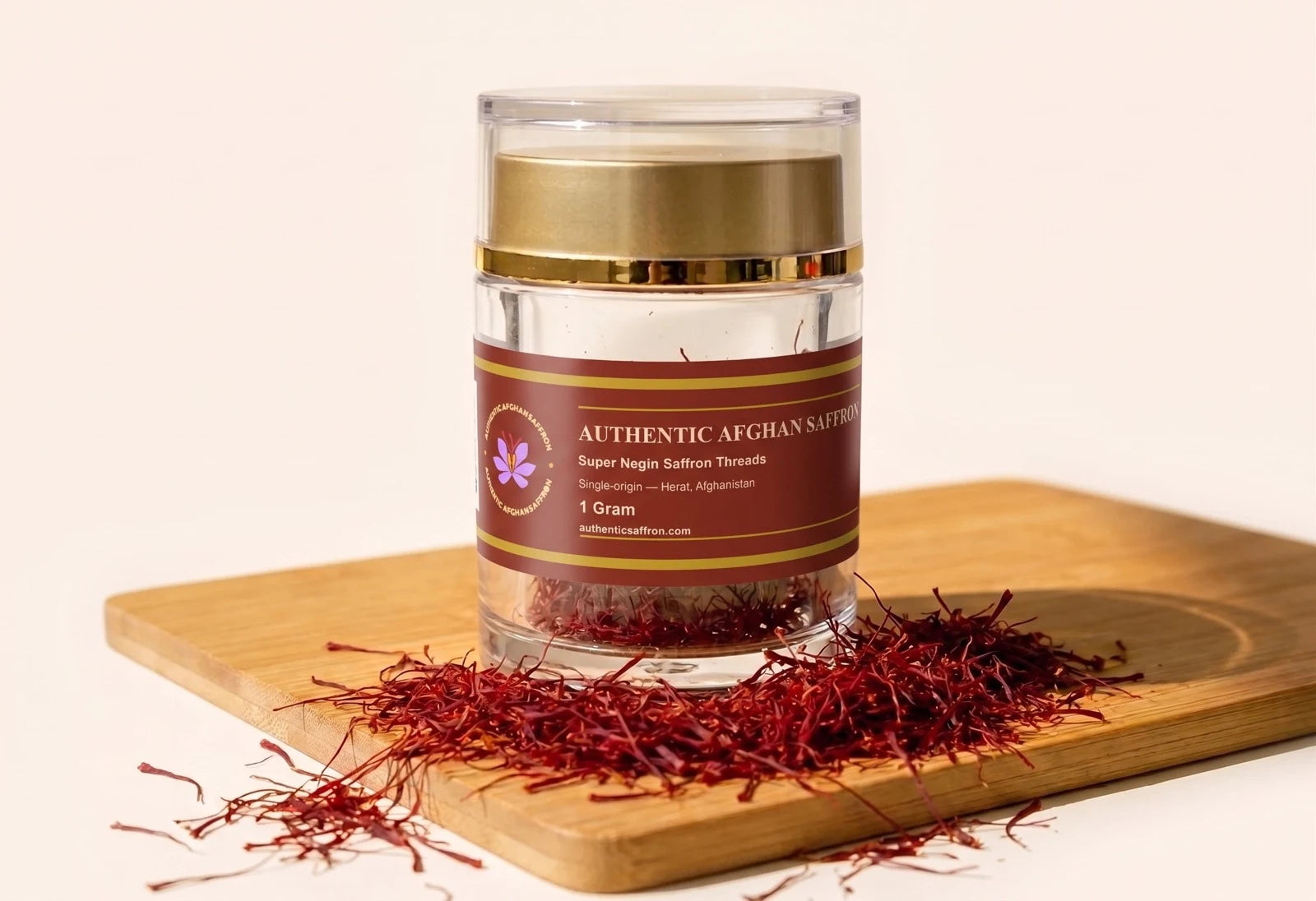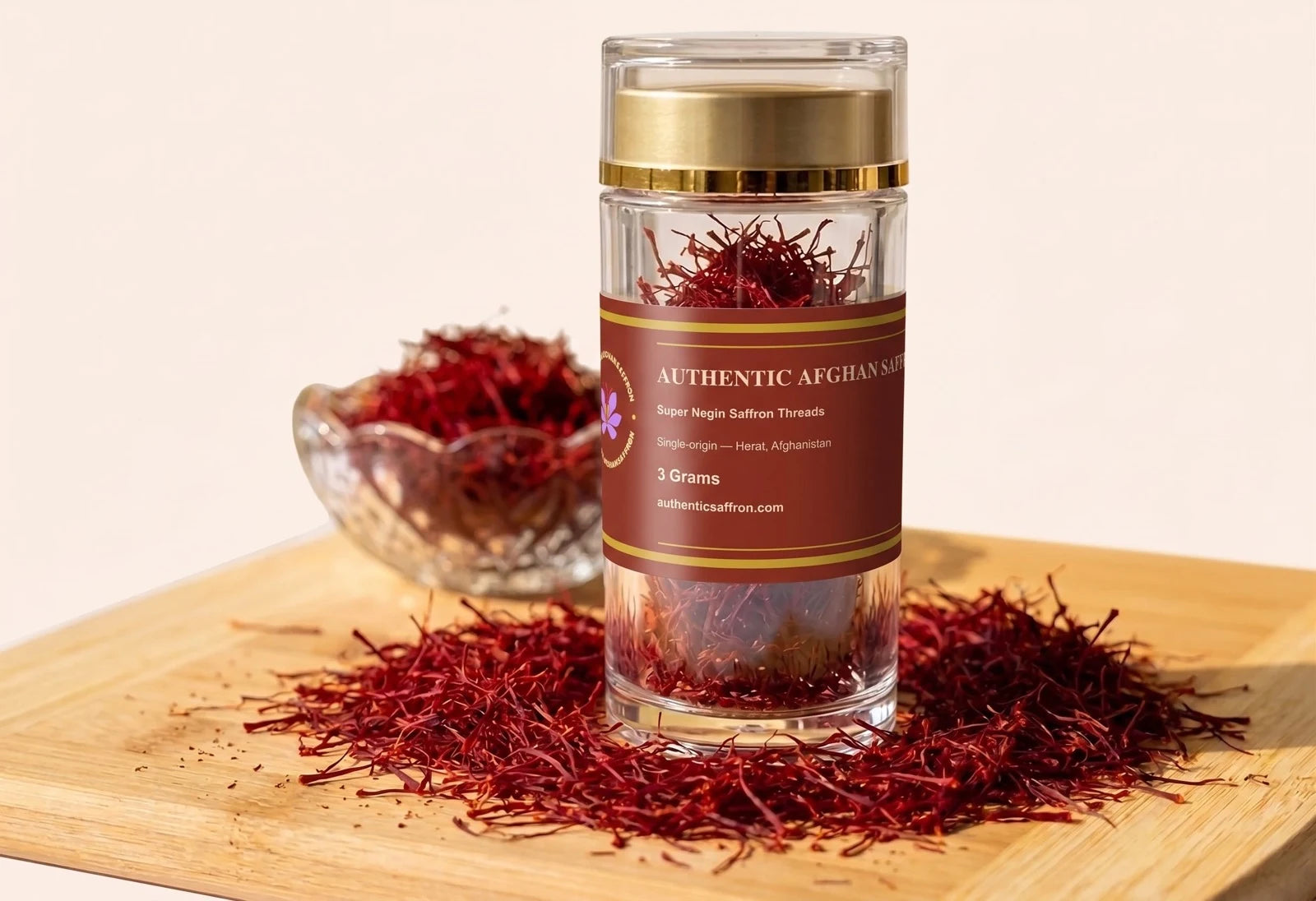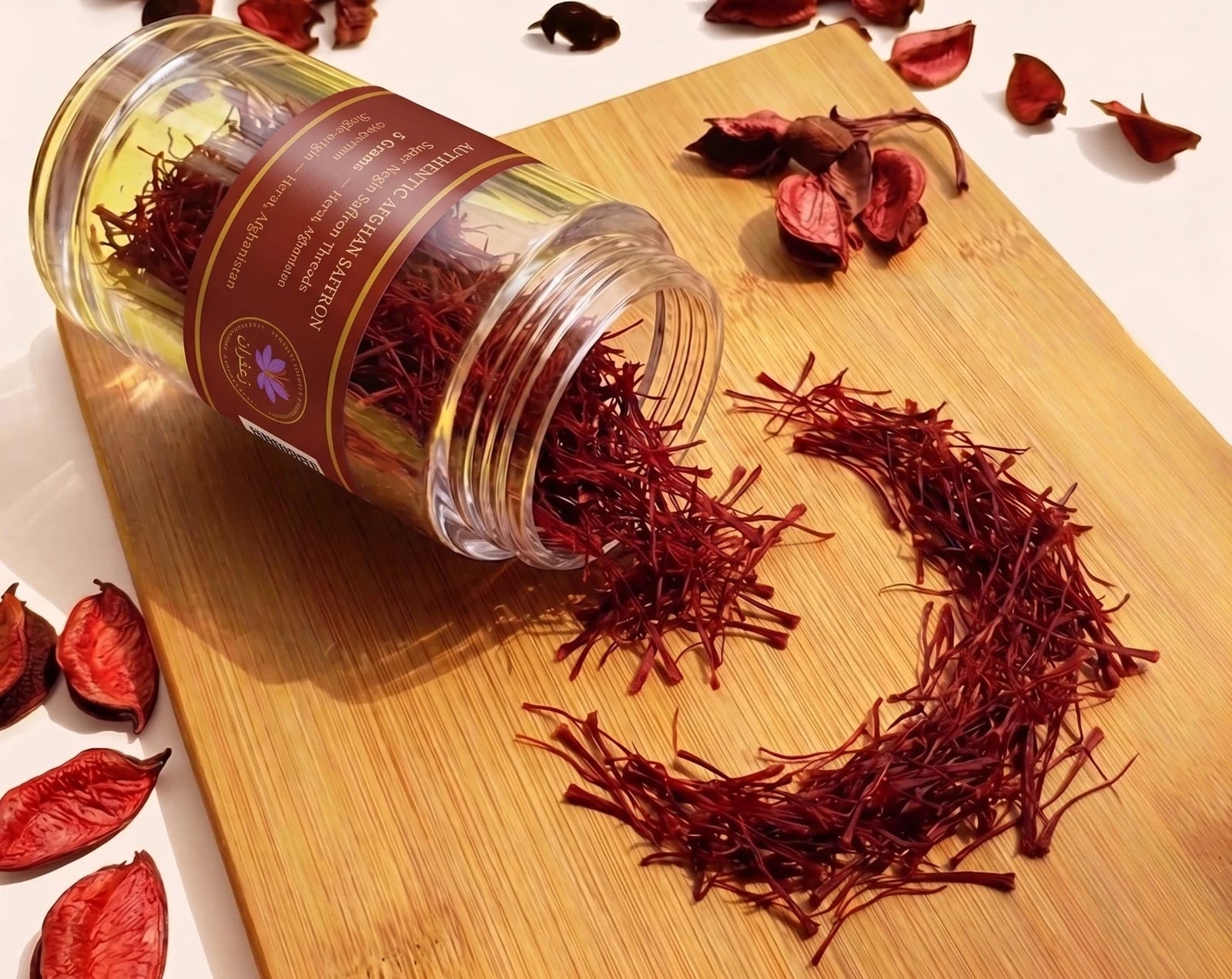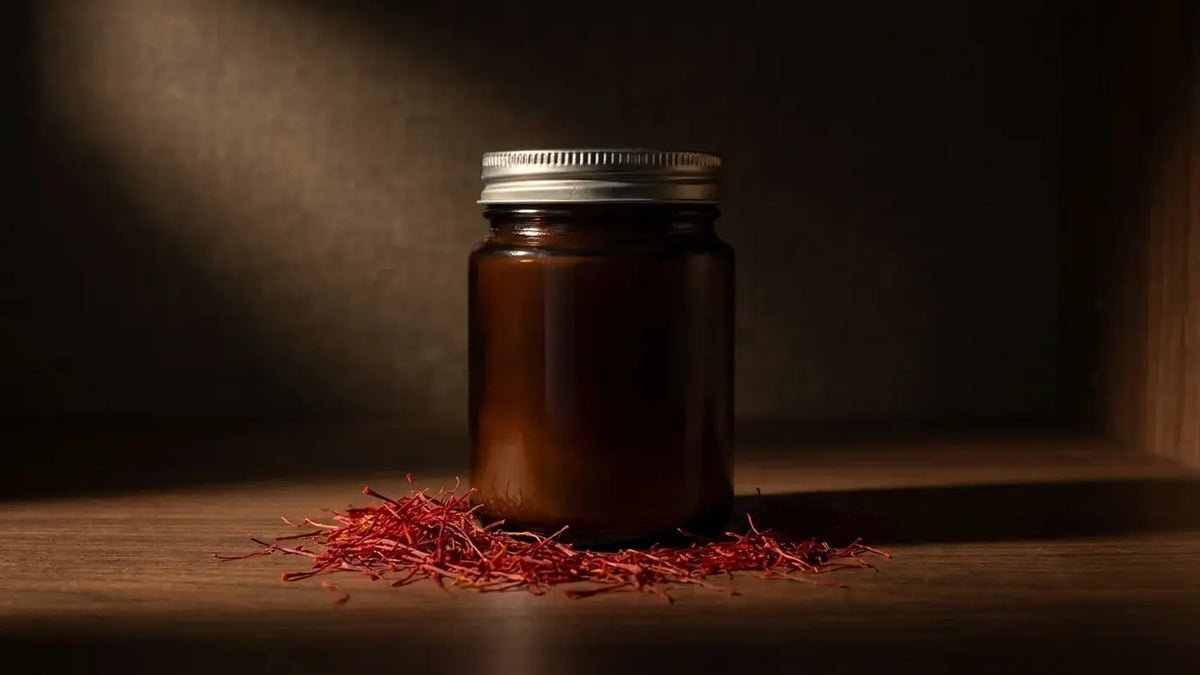
Saffron shelf life is not a spoilage question. Sealed away from light, air and damp, threads stay safe to eat for years — but they lose colour and aroma steadily from the day they are dried. A best-before date tells you when the seller expects that decline to matter in the pan.
Does saffron expire?
Not in the way milk or fresh herbs do. Properly dried saffron sits at a moisture level too low for mould or bacteria to get going, which is why the spice travelled across continents for centuries without refrigeration. ISO 3632, the international standard for saffron, caps moisture and volatile matter at 12 percent for filaments and 10 percent for powder. Saffron dried to that level is stable. You can read the standard’s scope at the ISO catalogue entry for ISO 3632-1.
What saffron does instead is fade. The three compounds that make it worth buying — crocin for colour, picrocrocin for bitterness, safranal for aroma — are all reactive. Light bleaches crocin. Warmth and oxygen carry safranal away. Damp air speeds every one of those reactions up. The threads keep looking like saffron long after they have stopped tasting like it, which is the whole trap.
So the honest framing is potency, not safety. Our longer piece on how saffron degrades walks through the chemistry.
What actually changes as saffron ages?
Four things move, and they do not move at the same speed.
- Aroma goes first. Safranal is volatile. Every time a jar is opened, some of it leaves. A tin opened weekly for a year smells noticeably flatter than one opened twice.
- Colour goes next, and only if there is light. Crocin is fairly durable in the dark. In a clear jar on a sunny counter it can pale within months.
- Bitterness lingers. Picrocrocin is the most stubborn of the three, which is why very old saffron can taste faintly harsh with no perfume behind it.
- Texture tells on the storage. Threads that have gone limp or that clump together have picked up moisture, and moisture is the accelerator for everything above. Our note on saffron moisture content covers why.
Are best-before dates on saffron meaningful?
They are useful, but they are not a legal verdict. In the United States, date labelling on most foods is not federally mandated — infant formula is the exception — so the date on a saffron tin is the packer’s own quality judgement rather than a regulated expiry. The US Food and Drug Administration publishes guidance on what those phrases mean.
Two dates matter more than the printed one. The first is the harvest year, because saffron is picked in autumn and everything after that is decline. The second is the day the pack was opened, because that is when oxygen exposure starts in earnest. A tin with a harvest year on it tells you more than a tin with a best-before three years out and no other information. If a seller will not state the harvest, ask; it is one of the standard questions to ask a saffron seller.
How should you store saffron to slow the decline?
Dark, cool, dry and sealed, in that order of importance. The table below is what we tell customers who ask why we ship in an opaque tin rather than a pretty glass jar.
| Storage choice | Effect on colour | Effect on aroma | Verdict |
|---|---|---|---|
| Airtight opaque tin, cool cupboard | Very slow fade | Very slow loss | Best everyday option |
| Glass jar kept inside a closed cupboard | Slow fade | Slow loss | Fine if the door stays shut |
| Clear jar on an open shelf or windowsill | Fast fade | Moderate loss | Avoid — light is the main enemy |
| Near the stove, oven or a hot appliance | Moderate fade | Fast loss | Avoid — heat drives off safranal |
| Refrigerator, jar opened while cold | Slow fade | Moderate loss | Risky — condensation adds moisture |
| Freezer, sealed and thawed before opening | Very slow fade | Slow loss | Workable for large quantities only |
The refrigerator row is the one that surprises people. Cold storage is not wrong in principle, but every time a cold jar meets warm kitchen air, water condenses inside it. If you must refrigerate or freeze, let the sealed container come back to room temperature before you open it. Our full guide to storing saffron at home goes further.
How can you tell if old saffron is still good?
Three checks, none of which need equipment.
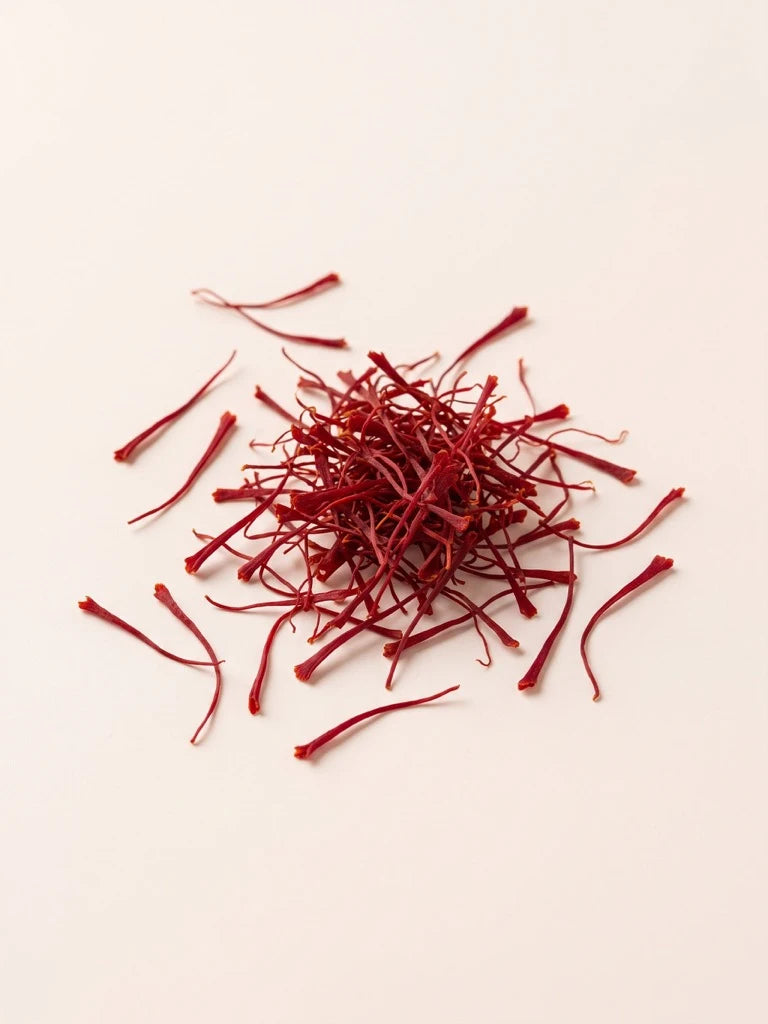
- Crush and smell. Press one thread between finger and thumb and sniff immediately. Fresh saffron is sweet, hay-like and slightly metallic. Faint or dusty means the safranal has largely gone.
- Bloom a test pinch. Ten threads in a tablespoon of warm water. Good saffron releases a yellow-orange that keeps deepening for ten minutes while the threads stay red. Instant, even colour that arrives in seconds points at dye rather than age, which is the basis of the cold water test.
- Taste the infusion. A little bitter and floral is right. Nothing at all means you will need more threads than usual to season a dish, and at that point you are better off replacing the tin.
Old saffron is rarely useless. It is usually just weaker, and weaker saffron can go into a stock, a braise or a bread dough where a small loss of perfume does not carry.
Does shelf life change what you should buy?
It should change how much you buy. A household cooking with saffron once a fortnight will not finish 10 grams before the aroma dulls, however good the storage. One or two grams bought from a current harvest and used inside a year beats a bargain jar that sits open for three. Choose a size you can finish while the aroma is still vivid instead of buying more than your kitchen will use.
Buy from someone who will tell you the harvest year and pack in something opaque and resealable. Our own approach to sourcing and packing is set out on the buying saffron page.
Frequently asked questions
Can old saffron make you sick?
Dry saffron stored below its moisture limit does not support mould or bacterial growth, so age alone does not make it unsafe. Saffron that has been stored damp, smells musty, or shows visible mould should be thrown away rather than rescued.
How long does saffron keep once the tin is opened?
Expect meaningful aroma for around a year of normal use if the tin is opaque, sealed after every use and kept away from heat. Colour lasts longer than aroma, so an older tin may still tint a rice dish well while smelling much weaker than it did.
Should I throw saffron away after the best-before date?
No. In the United States that date is the packer’s quality estimate, not a regulated expiry. Crush a thread and smell it. If there is still a sweet hay-like perfume, use it, and simply add a few more threads than the recipe asks for.
How long does bloomed saffron liquid keep?
Treat it like any other fresh infusion. Bloomed saffron in water or milk should be used the same day and kept refrigerated if you are not using it within a couple of hours. It is not a shelf-stable extract.