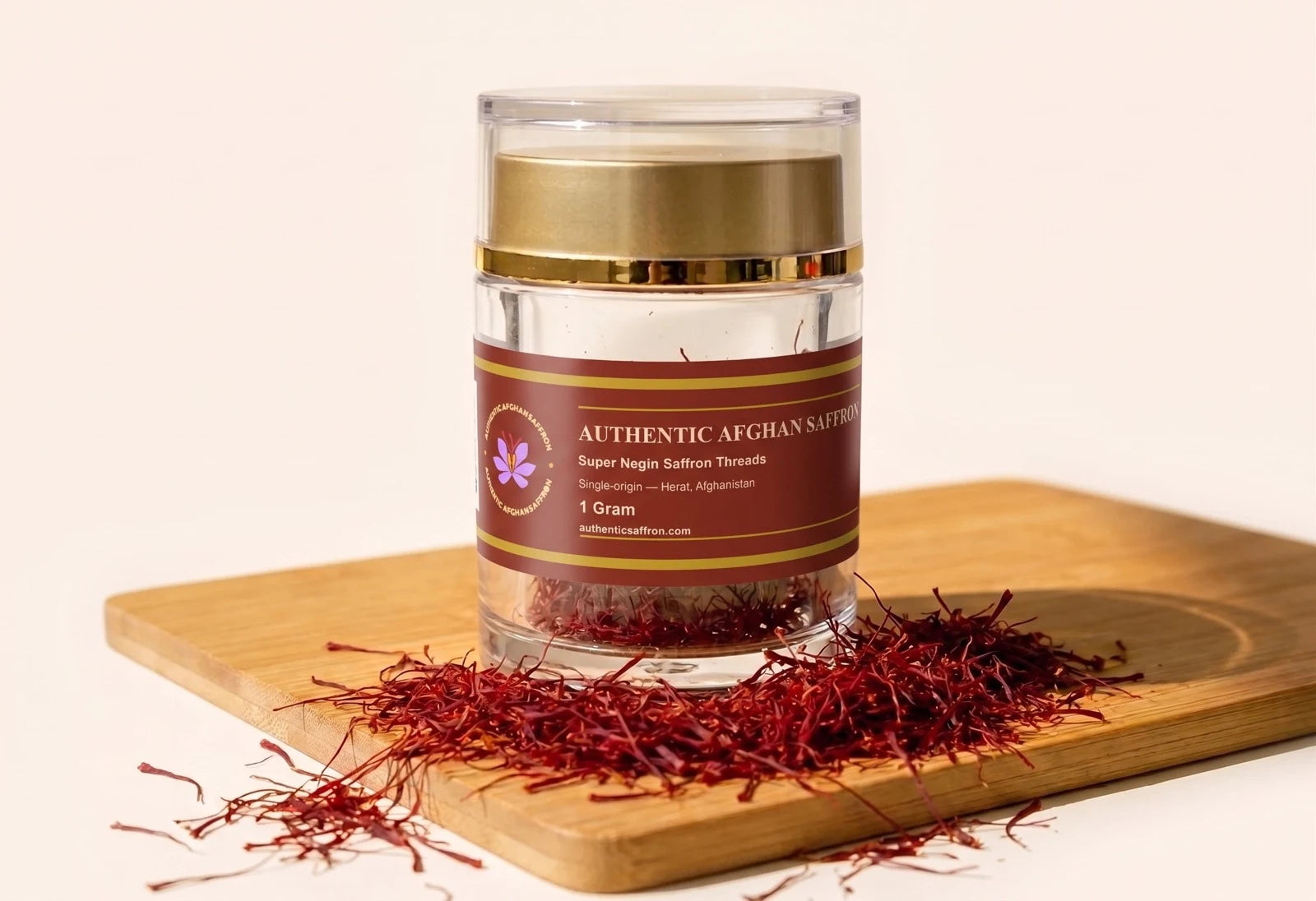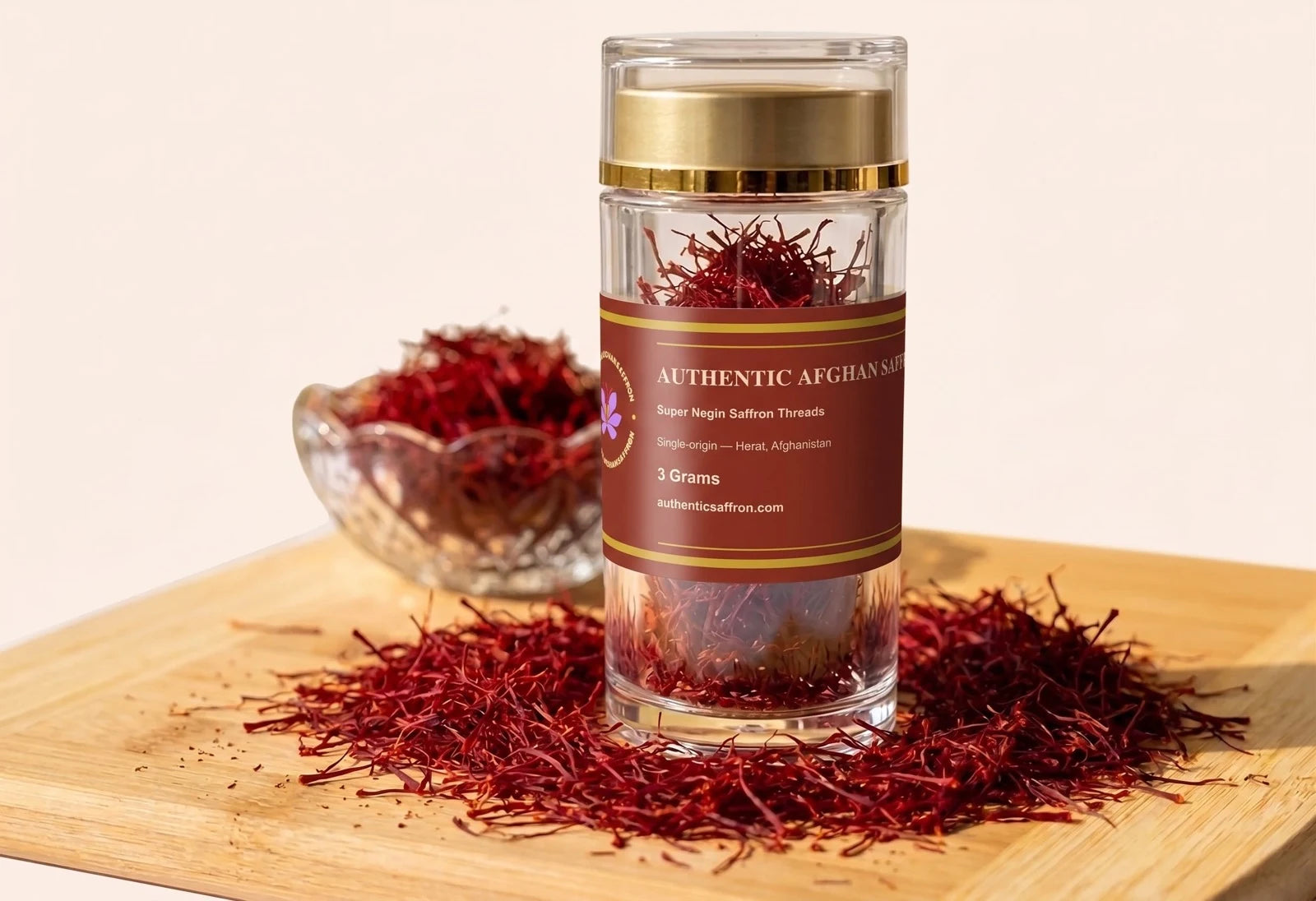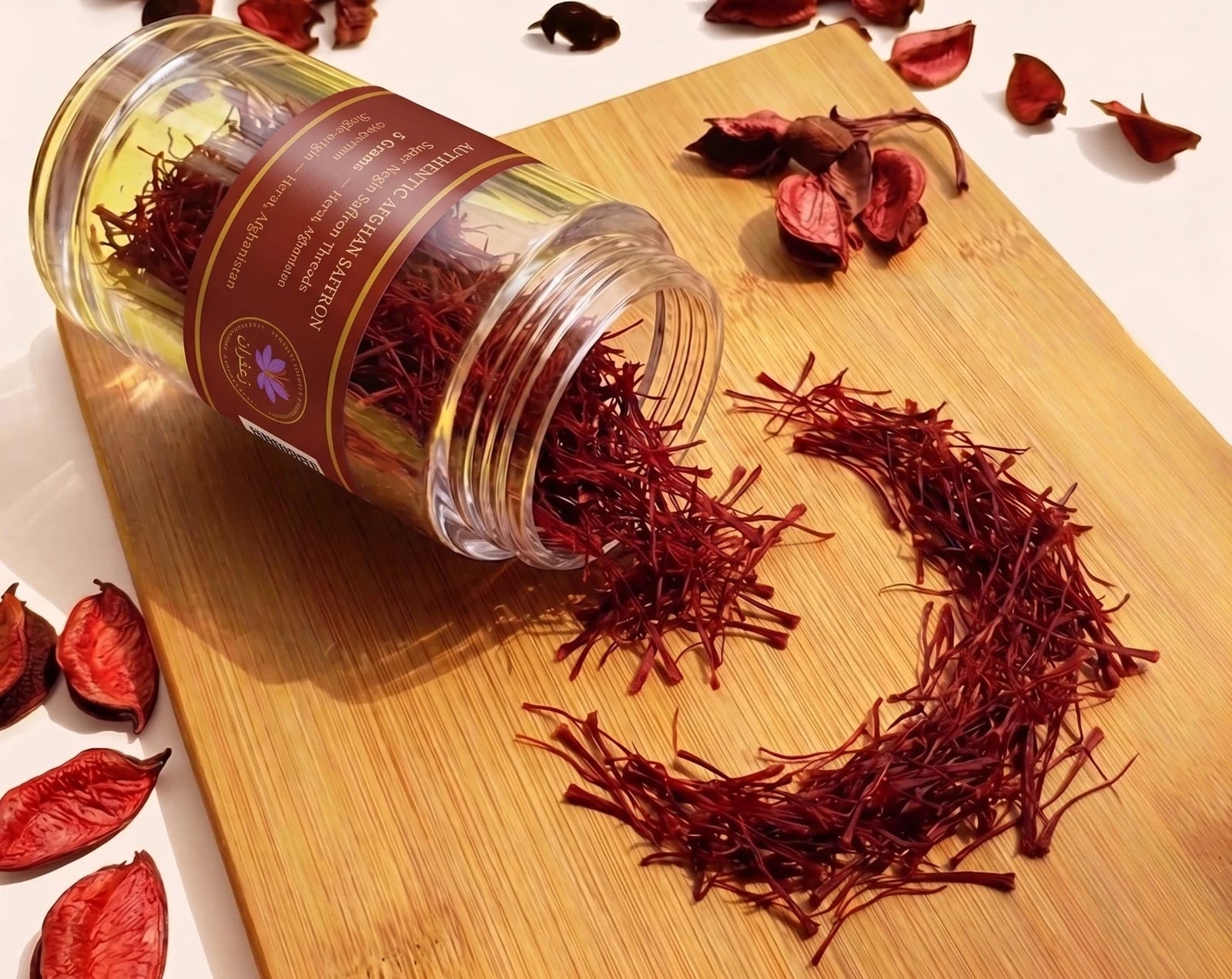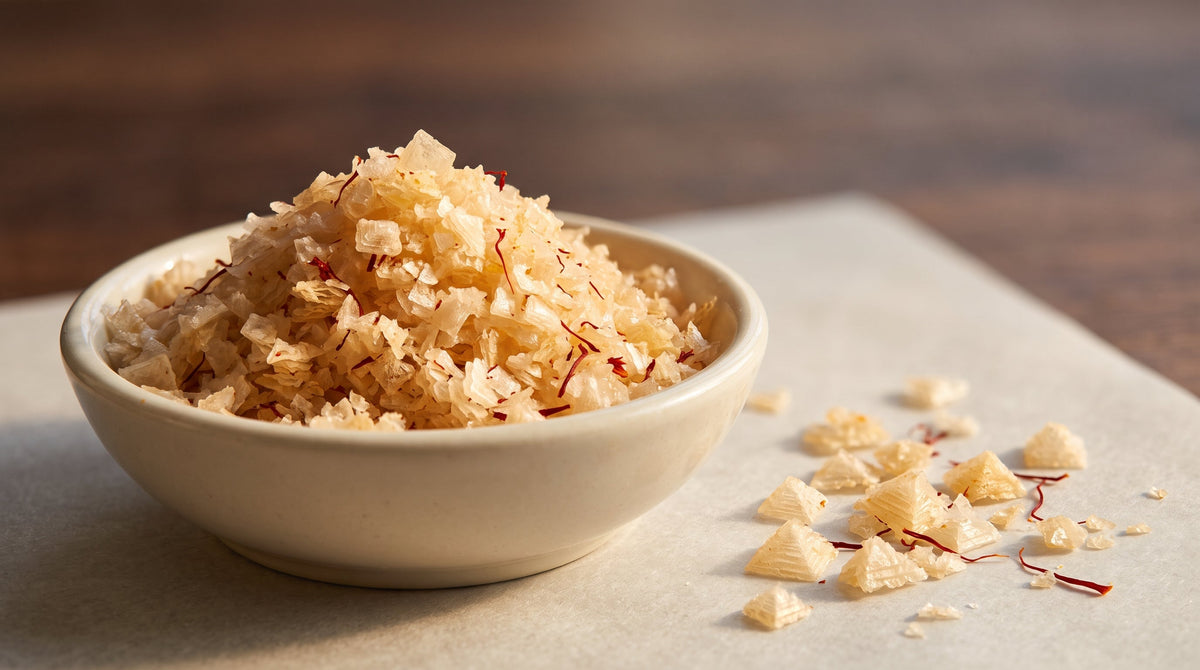
Saffron salt is made by blooming 30 threads — 0.12 g — in two tablespoons of warm water, folding that through 50 g of flaky sea salt, and drying the tray in a 170°F oven for about an hour. The flakes come out apricot-coloured with their pyramids intact.
What is the point of colouring salt?
Half of it is honestly appearance. Apricot flakes scattered over a fried egg look like someone made an effort. But there is a functional argument underneath, and it is about carriage rather than colour.
Saffron is difficult to apply at the end of cooking. A pinch of dry threads on a finished plate stays dry, chews like thread, and releases almost nothing. Salt fixes that twice over. In the making, the crystals act as an abrasive that breaks threads down far better than fingers can. On the plate, each flake lands in the surface moisture of hot food, dissolves, and lets go of its smell about six inches from your nose — rather than in the oven vent forty minutes earlier.
No heritage to claim. Flavoured finishing salts are a modern artisan-shop and restaurant idea, maybe thirty years old. Saffron takes to the format unusually well because it is one of very few spices whose aroma survives being suspended in a dry crystal.
How much saffron goes into 50 g of salt?
Thirty threads, about 0.12 g, folded through 50 g of flakes — roughly three quarters of a cup of a light pyramid salt. That gives strong, even colour without wetting the salt into a paste.
Be clear-eyed about what a pinch then delivers. A generous three-finger pinch is around half a gram of salt, which carries something like a third of a thread. This is a garnish, not a dose. If you want saffron to be the flavour of a dish rather than an accent on top of it, bloom threads into the dish itself and use this at the end for the look and the last-second smell. Our page on our saffron sets out the amounts that actually flavour a pot.
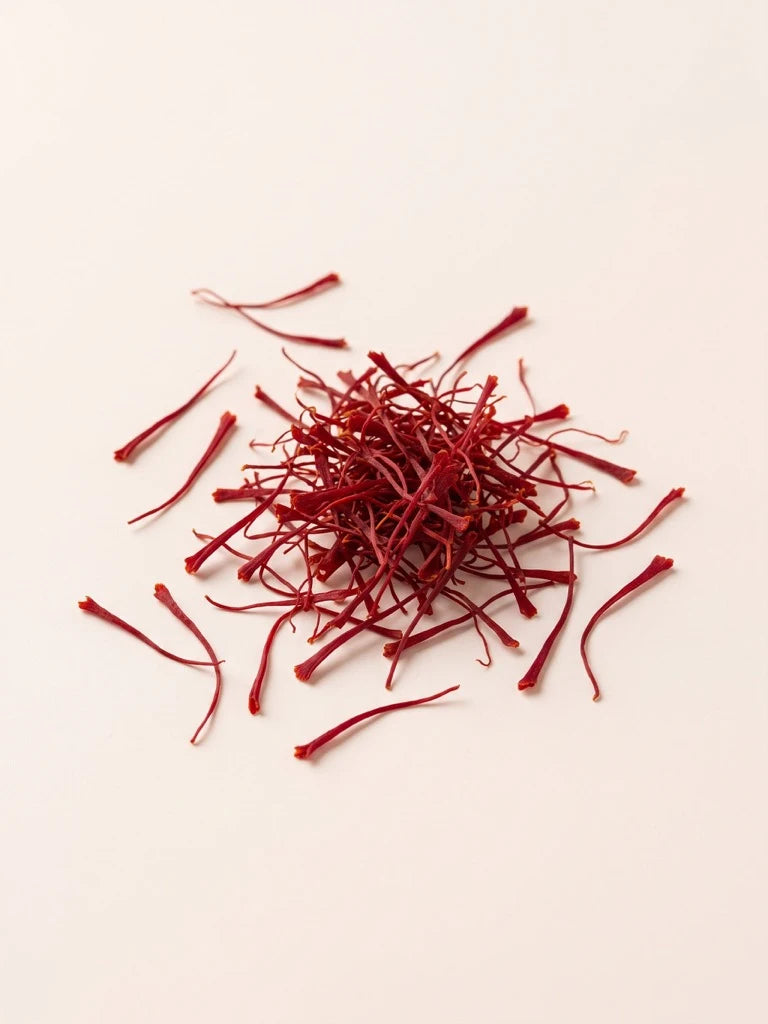
The blooming rule holds even though the water is going to be driven off again. Two tablespoons of water at about 150°F (65°C) for 20 minutes, covered — steaming, never bubbling. Boiling water takes the aroma with it as steam, and in this recipe the aroma is the only thing you are trying to trap. Long all-red threads bloom faster and more completely than broken material; there is more on that on our saffron grading and quality page.
What will you need on hand?
The salt matters more than usual. Maldon-style pyramid flakes hold colour on their flat faces and stay recognisably flaky. Fine sea salt turns a uniform orange that reads as turmeric. Kosher salt works, though its hollow crystals soak up more water and want a longer dry.
- About 30 saffron threads (0.12 g)
- 2 tbsp (30 ml) water, for blooming
- 50 g (about 3/4 cup) flaky sea salt, such as Maldon
- 1/2 tsp finely grated lemon zest, optional
How do you make and dry it?
- Bloom the saffron. Heat the 2 tbsp of water to about 150°F (65°C), steaming with no bubbles breaking. Crumble the threads in, cover the cup and leave 20 minutes. Then press the softened threads flat against the side with a teaspoon so the fragments are small enough to cling to a flake.
- Line a quarter sheet pan. Cut parchment to fit a 9 by 13 inch pan. Anything smaller piles the salt too deep to dry evenly; a full sheet pan spreads it so thin that the edges dry to dust while the middle is still wet.
- Wet the salt in a bowl, not on the pan. Tip the flakes into a wide bowl and pour the saffron liquid over in a slow spiral. Fold with a rubber spatula for about a minute, lifting from underneath. Fold, do not stir: stirring shatters the pyramids into grit.
- Check that nothing is pooling. Tilt the bowl. Every flake should look orange and slightly damp, with no liquid running to the low side. If there is a puddle, add another tablespoon of dry salt rather than trying to bake it off.
- Spread and dry low. Tip onto the parchment and spread with the spatula until the layer is only a flake or two deep. Dry at 170°F (75°C), or the lowest setting your oven offers, for 45 to 60 minutes.
- Break up the clumps twice. At 20 minutes and again at 40, rake through the salt with a fork, breaking any lumps as they form. Skip this and you will lift out one solid orange sheet at the end.
- Test a pinch. Take a few flakes out, let them cool for 30 seconds, and press them between finger and thumb. Properly dry salt squeaks and crumbles. Any tackiness at all means another ten minutes in the oven.
- Cool, then crush lightly. Leave the pan on the counter until stone cold. Rub the salt between your palms to break the last clusters, or give it one short pass in a mortar. Do not grind it to powder; the flake structure is most of the appeal.
- Jar it. Airtight, somewhere dark and dry, for up to six months. Stir the lemon zest in only if you plan to finish the jar within a fortnight, since fresh zest reintroduces moisture.
What ruins a batch?
Three things, in descending order of how often they happen.
- Too much water. Past about 2 tbsp per 50 g you dissolve more salt than the drying can recrystallise gracefully, and the tray sets into a hard orange slab. It is edible but it is no longer finishing salt.
- An oven that runs hot. Above roughly 200°F the saffron toasts, and toasted saffron smells flat and dusty rather than floral. If your oven cannot hold a low temperature, leave the pan somewhere warm and airy for a day instead.
- Humidity afterwards. An open dish on a counter in August clumps within a week. Keep it lidded and use a dry spoon.
There is a dry route worth knowing if you do not want to run an oven for an hour. Grind the threads in a mortar with a tablespoon of the salt as the abrasive until you have a fine orange powder, then fold that through the remaining flakes. It takes four minutes and no drying, but the colour stays as loose powder rather than bonding to the flake faces, and it separates in the jar. Our note on grinding saffron properly explains why an abrasive is not optional.
As for what to put it on: fried eggs, roast carrots and winter squash, focaccia before it goes in the oven, popcorn, grilled white fish, and, less obviously, vanilla ice cream. It is a waste on anything already salted and sauced.
Frequently asked questions
Does a pinch actually taste of saffron?
Faintly, and mostly as smell rather than taste. You get a floral note in the first second after it hits hot food, then it is gone. That is the honest description. Anyone selling saffron salt as a way to season a whole dish with saffron is overselling it.
Can I use kosher or fine sea salt instead of flakes?
Kosher works well and needs about fifteen minutes longer in the oven, because the hollow crystals hold more water. Fine sea salt technically works but looks wrong — uniformly orange, indistinguishable from a turmeric blend at a glance, and it dissolves too fast to give the burst you are after.
Does it fade?
Slowly. In a sealed jar in a dark cupboard the colour is still good at six months and the smell is noticeably quieter by then. Light is the enemy, so a clear jar on a sunny shelf is the one thing to avoid. The same rules that apply to storing saffron threads apply here.
Can I do it without an oven?
Yes. Spread the wet salt on parchment on a rack and leave it in a warm, moving-air spot for 24 to 36 hours, raking it twice a day. A dehydrator at its lowest setting does the same job in about three hours. Both give slightly better colour than the oven, because less heat reaches the saffron.
Read next
- Saffron scrambled eggs — the plate this was invented for
- Saffron focaccia — scatter it over the dimples before baking
- Threads versus powder — why we sell the thread