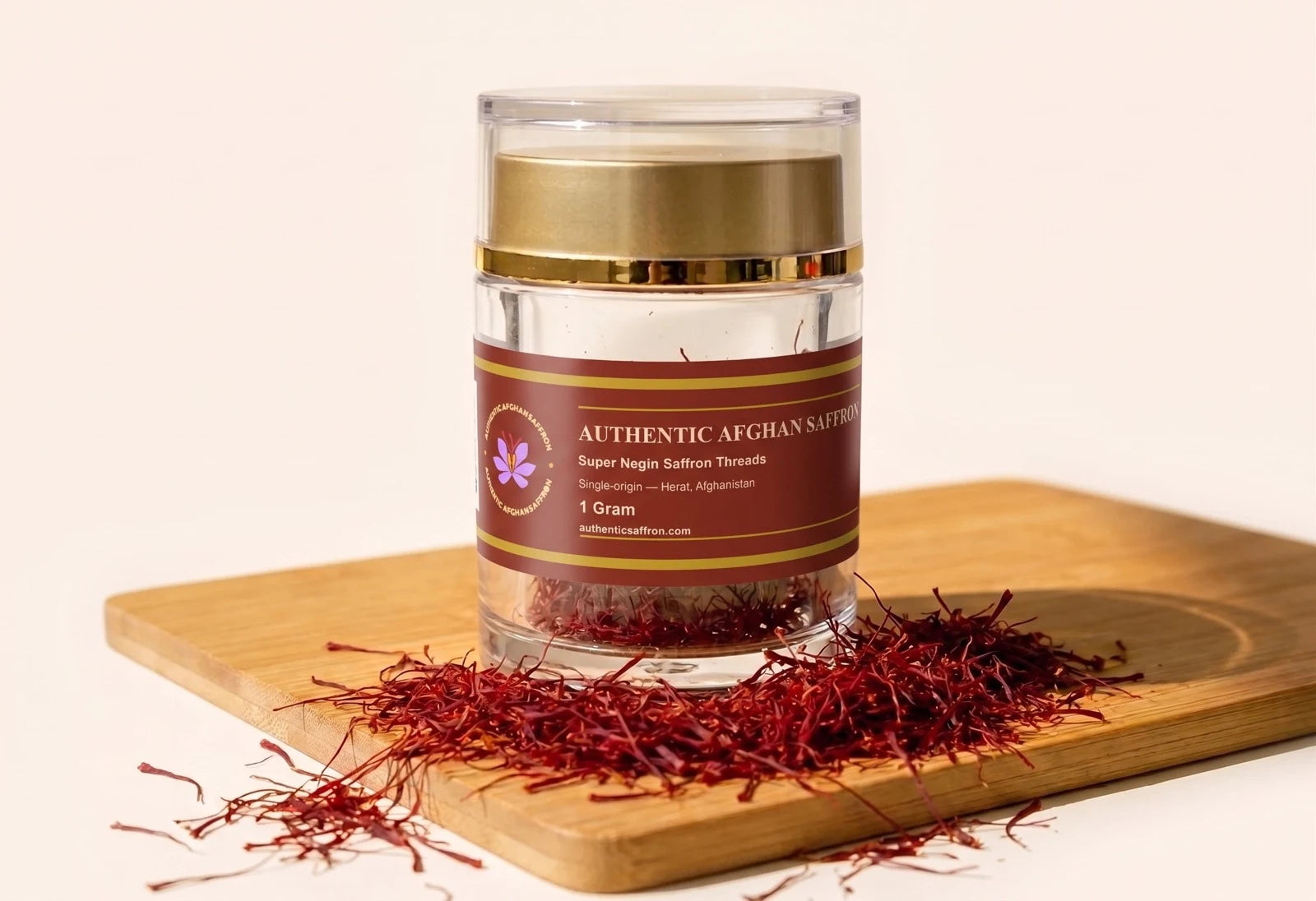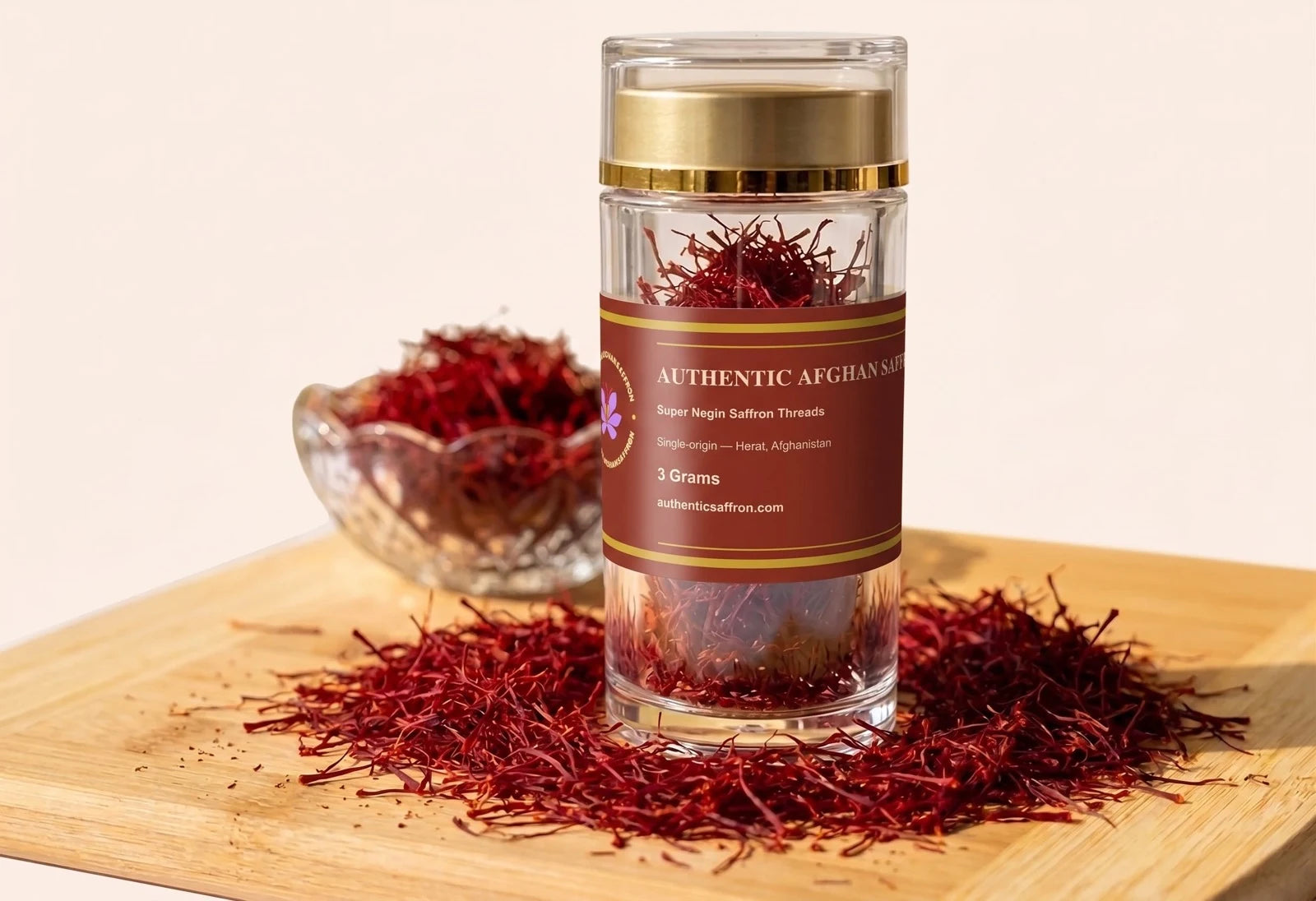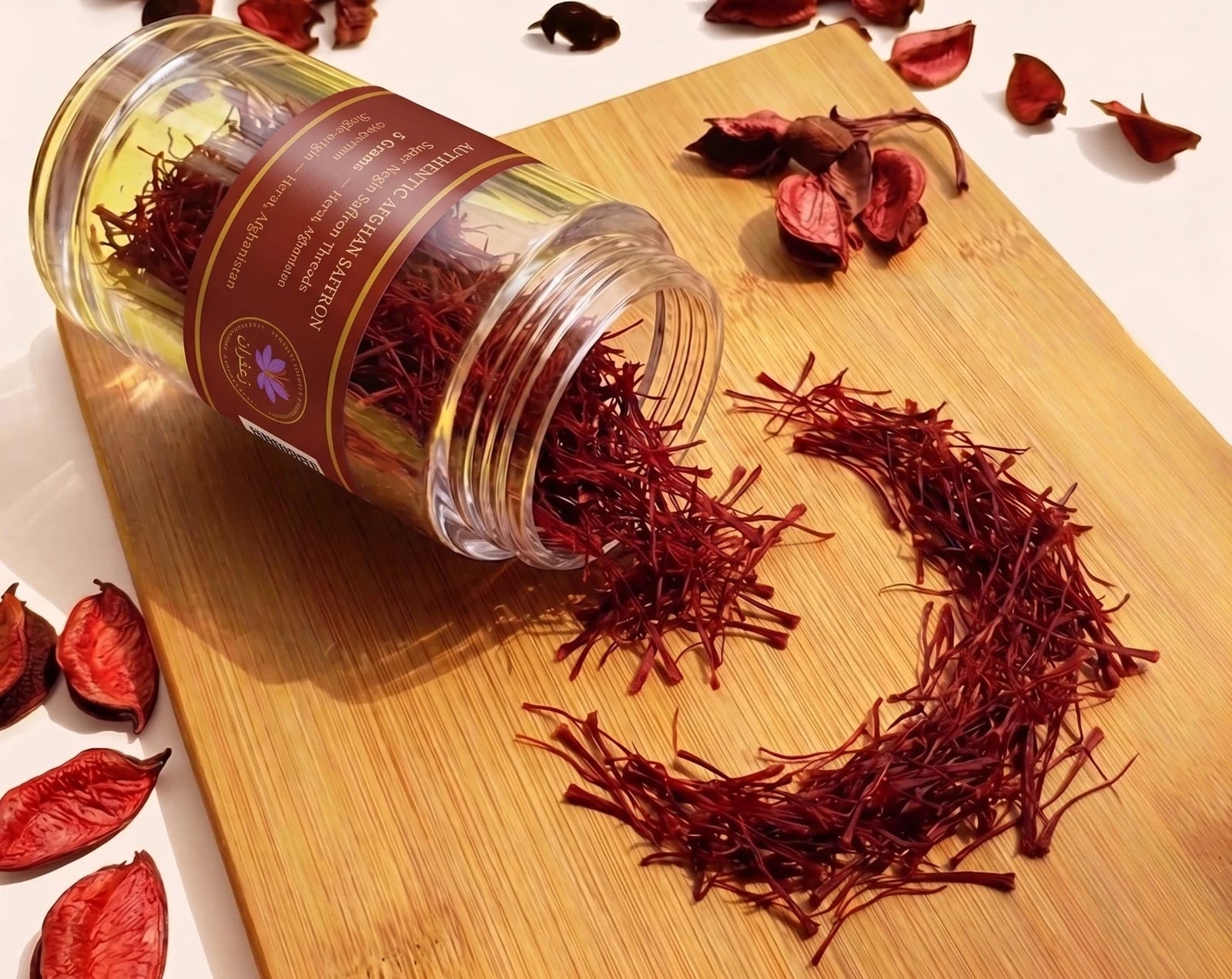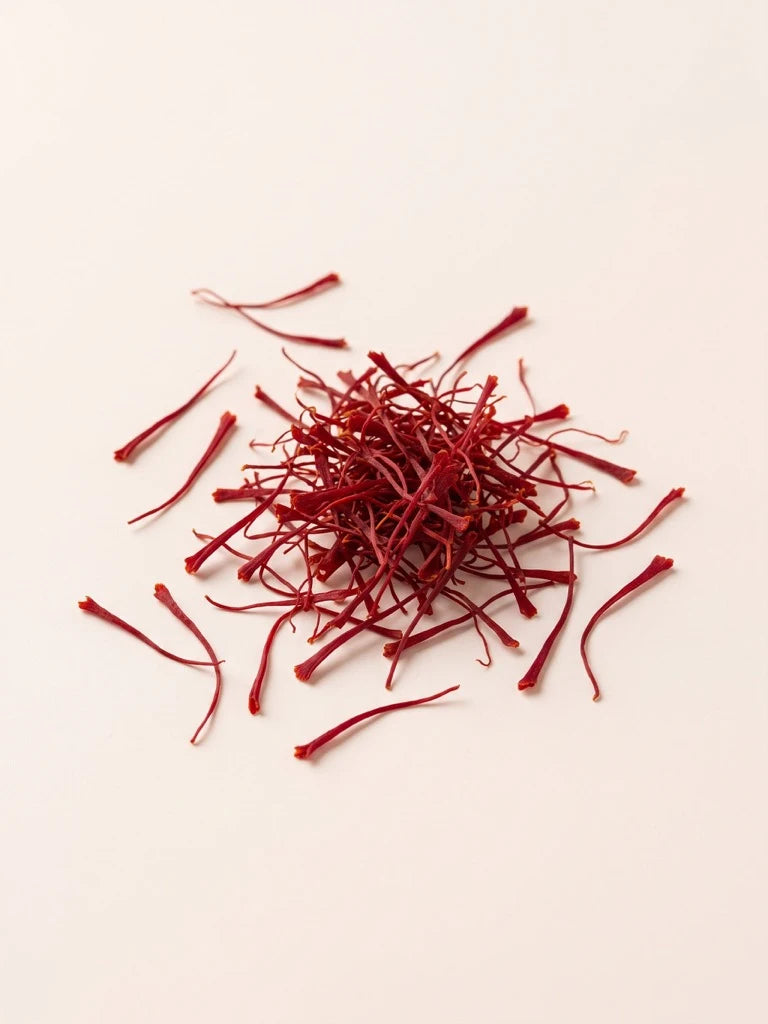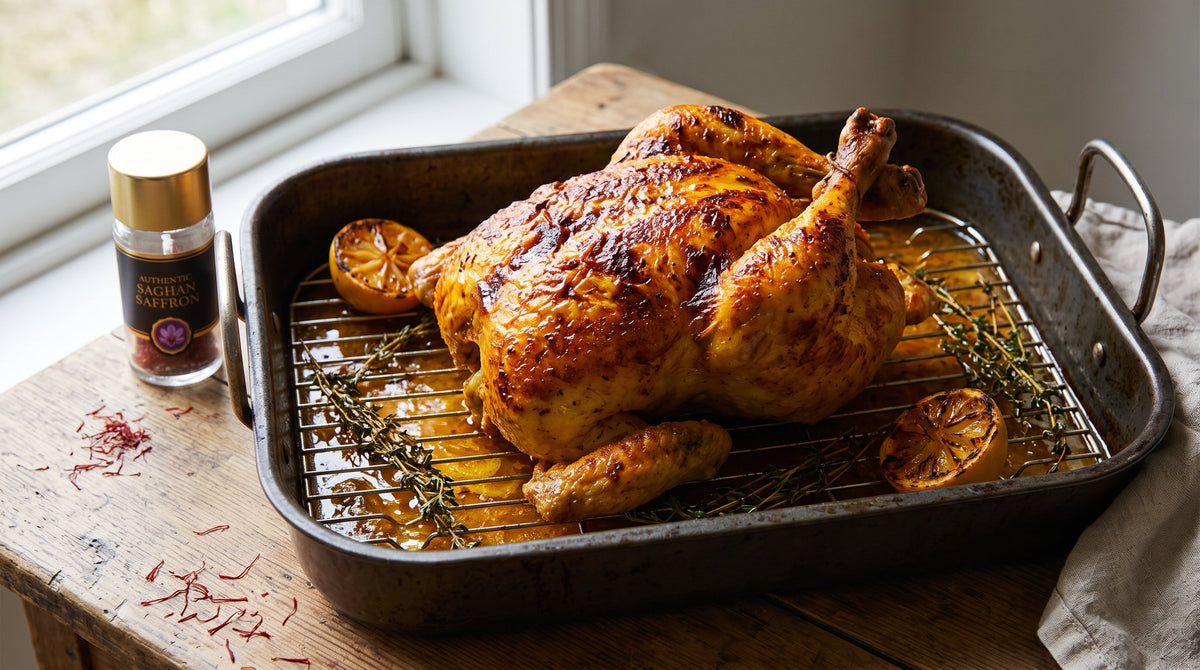
Saffron roast chicken works by putting the spice where the fat is. Bloom 30 threads (0.12 g) in warm water, beat them into softened butter, and push that under the skin rather than over it. Roast at 425°F for around an hour and finish the pan juices with the rest.
No one should pretend this is an old dish. Roast chicken with saffron butter is a modern kitchen idea, and a good one, but it does not come with a village or a century attached. What it does have is a sound reason for existing.
Why does saffron belong in the butter?
Saffron gives up its colour to water and its smell to fat. Crocin dissolves happily in a warm cup of water, which is why blooming works. The aroma compounds behind the scent are far more soluble in butter, and butter is also what carries them into meat.
A wet marinade cannot do this. Poultry absorbs very little liquid past the first few millimetres, so a saffron marinade mostly sits on the surface and then evaporates or burns. Butter under the skin melts at body temperature, spreads across the whole breast, and soaks slowly downward for the entire hour the bird is in the oven.
The skin does the rest. It acts as a lid, holding the butter against the meat and shielding the threads from direct radiant heat. Our comparison of blooming liquids goes further into why fat and water pull different things out of the same thread.
How much saffron do you need?
Thirty threads, roughly 0.12 g, for a bird that feeds four. Chicken is mild, and the butter concentrates whatever you give it, so this is one of the few dishes where a modest amount reads clearly on the plate.
Bloom the threads in just 2 tablespoons of water at about 150°F (65°C) for 20 minutes. A small volume matters here: butter will only take on so much liquid before it splits, and a quarter cup of saffron water will break your compound butter no matter how patiently you beat it.
Thread strength varies with harvest, handling, and storage, so 30 threads will not perform identically in every kitchen. Our guide to why we source whole Herat threads explains the quality and handling standards we use.
What is in it?
- 1 whole chicken, 4 to 4.5 lb (1.8 to 2 kg)
- 1 tbsp kosher salt, roughly 1 tsp per pound
- About 30 saffron threads (0.12 g)
- 2 tbsp water
- 6 tbsp (85 g) unsalted butter, properly softened
- 1 garlic clove, grated
- Finely grated zest of 1 lemon, the lemon kept for the cavity
- 1/2 tsp coarsely ground black pepper
- 1 small onion, halved
- 4 thyme sprigs
- 1/2 cup (120 ml) chicken stock or water, for the pan
How do you roast it?
- Dry brine the day before. Salt the chicken all over and inside the cavity, then leave it uncovered on a rack in the fridge for 12 to 24 hours. By the end the skin should feel dry and papery, almost like parchment. That is what crisps.
- Bloom the saffron. Heat the water to about 150°F (65°C) and pour it over the threads in a small bowl. Leave it 20 minutes. You want a deep orange liquid; if it is pale straw after twenty minutes, the threads are weak.
- Make the saffron butter. Mash the softened butter with the saffron liquid and threads, the garlic, lemon zest and pepper. It will look curdled for the first minute. Keep working it with a fork until it comes together as an even orange paste. Cold butter will not take the water at all.
- Loosen the skin. Slide your fingers under the skin at the neck end and work back over each breast and down onto the tops of the thighs. Go slowly and keep the thin membrane along the breastbone intact so the butter cannot escape.
- Butter the bird, but not the outside. Push two thirds of the butter under the skin and smooth it flat from the outside with your palm. Keep the last third cold in the fridge for the sauce. Do not spread saffron butter on top of the skin, where it will simply scorch.
- Fill and tie. Put the halved lemon, the onion and the thyme in the cavity and tie the legs together with string. Tuck the wing tips behind the shoulders so they do not burn.
- Roast hot. Heat the oven to 425°F (220°C). Set the chicken breast up on a rack in a skillet or roasting pan and pour the stock into the pan below, which stops the drips from burning. Roast for 60 to 70 minutes.
- Check the temperature, not the clock. Pull the bird when the thickest part of the breast reads 157°F (69°C) and the thigh, clear of the bone, reads about 175°F (79°C). If the skin is dark by the 45 minute mark, tent it loosely with foil.
- Rest for twenty minutes. Move the chicken to a carving board and leave it alone. Cutting early loses juice onto the board and drops the breast temperature faster than resting does.
- Finish the pan juices. Tip the pan juices into a small jug and spoon off the fat. Off the heat, whisk in the reserved cold saffron butter a piece at a time until the sauce turns glossy. Do not boil it or it will split.
What separates a good one from a dry one?
Salt early or not at all. A dry brine has time to draw moisture out, dissolve, and be reabsorbed as seasoned liquid. Salt applied fifteen minutes before roasting only pulls water to the surface and leaves the skin damp at exactly the wrong moment.
Soften the butter properly. Butter at fridge temperature will not emulsify the saffron water, and butter melted in the microwave separates into oil and milk solids. You want it at around 65°F, soft enough to dent with a thumb and still hold its shape.
Trust a thermometer over a timer. A 4 lb bird and a 4.5 lb bird are twelve minutes apart, and ovens lie about their own temperature. Pulling at 157°F in the breast sounds low, but carryover heat takes it where it needs to be during the rest.
And do not skip the sauce. The reserved butter whisked into skimmed juices is the strongest saffron flavour in the whole meal, because none of it has been near direct heat. If you are wondering what else to put alongside, our notes on saffron pairings are a decent place to start.
Frequently asked questions
Will saffron butter burn at 425°F (220°C)?
Under the skin, no. The skin shields it and the meat underneath keeps it near boiling point rather than frying temperature. On top of the skin, yes, and quickly. Saffron threads sitting on the surface of a bird at that heat go black and bitter in about twenty minutes.
How do I get the butter under the skin without tearing it?
Work at the neck end with your fingers rather than a spoon, and keep your hand flat against the meat instead of pushing upward. If the skin does tear, close it with a toothpick. A cold bird straight from the fridge is easier to handle than a room-temperature one.
Can I spatchcock the chicken instead?
Yes, and it is faster. Remove the backbone, flatten the bird, butter under the skin as usual, and roast at 450°F (230°C) for 40 to 45 minutes. You get more crisp skin and a shorter cook, at the cost of a less impressive thing to carry to the table.
What should I do with the pan juices?
Do not throw them out, because a good deal of the saffron ends up there. Skim the fat, then whisk the reserved cold butter in off the heat. If you want more volume, add a splash of stock to the roasting pan and scrape it over medium heat before you strain.
Read next
- Saffron compound butter, which is the same base made in a bigger batch and frozen.
- Saffron roasted vegetables to go in the pan underneath.
- Saffron chicken soup for the carcass the next day.
- How much saffron per person when you scale the bird up to two.