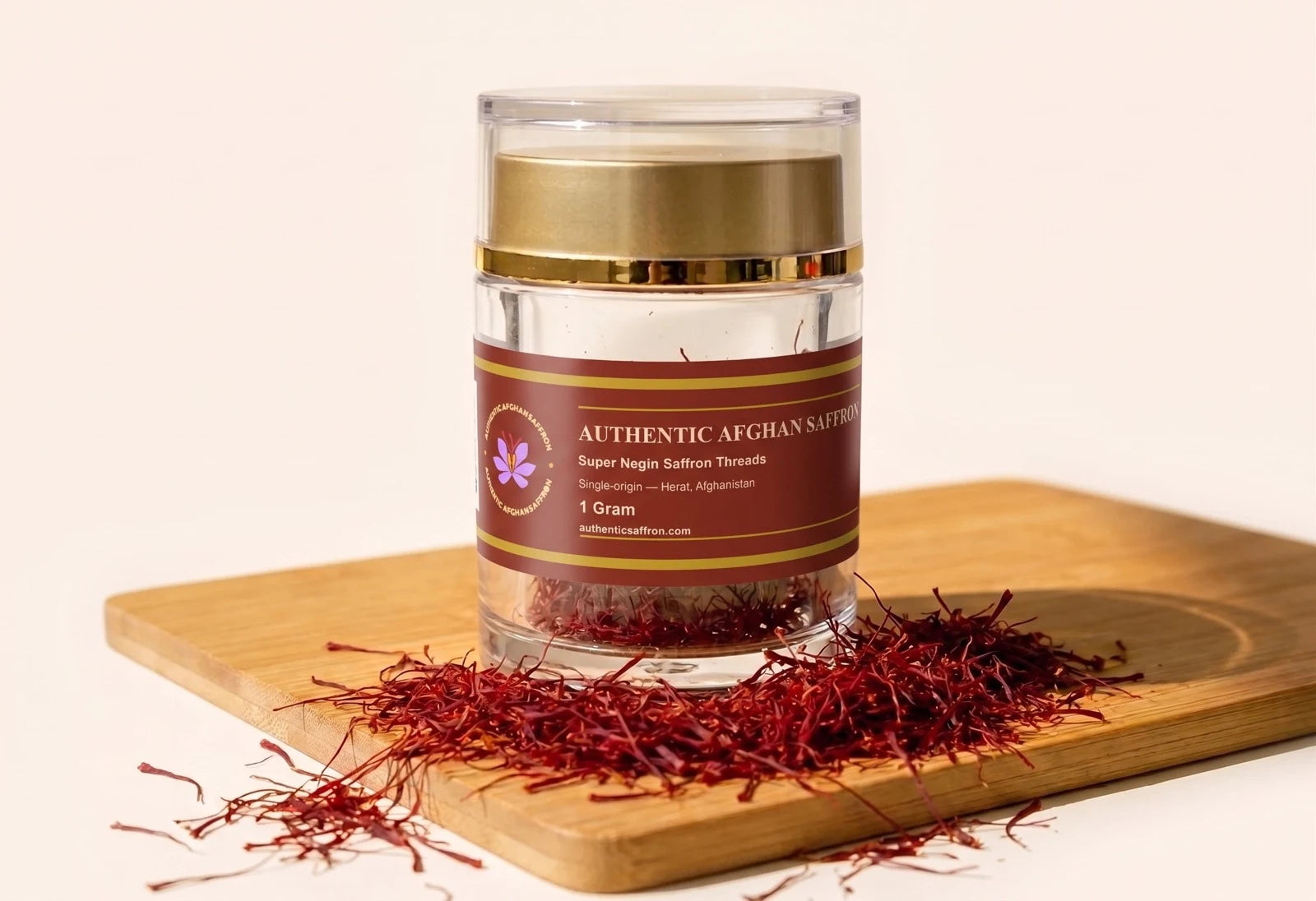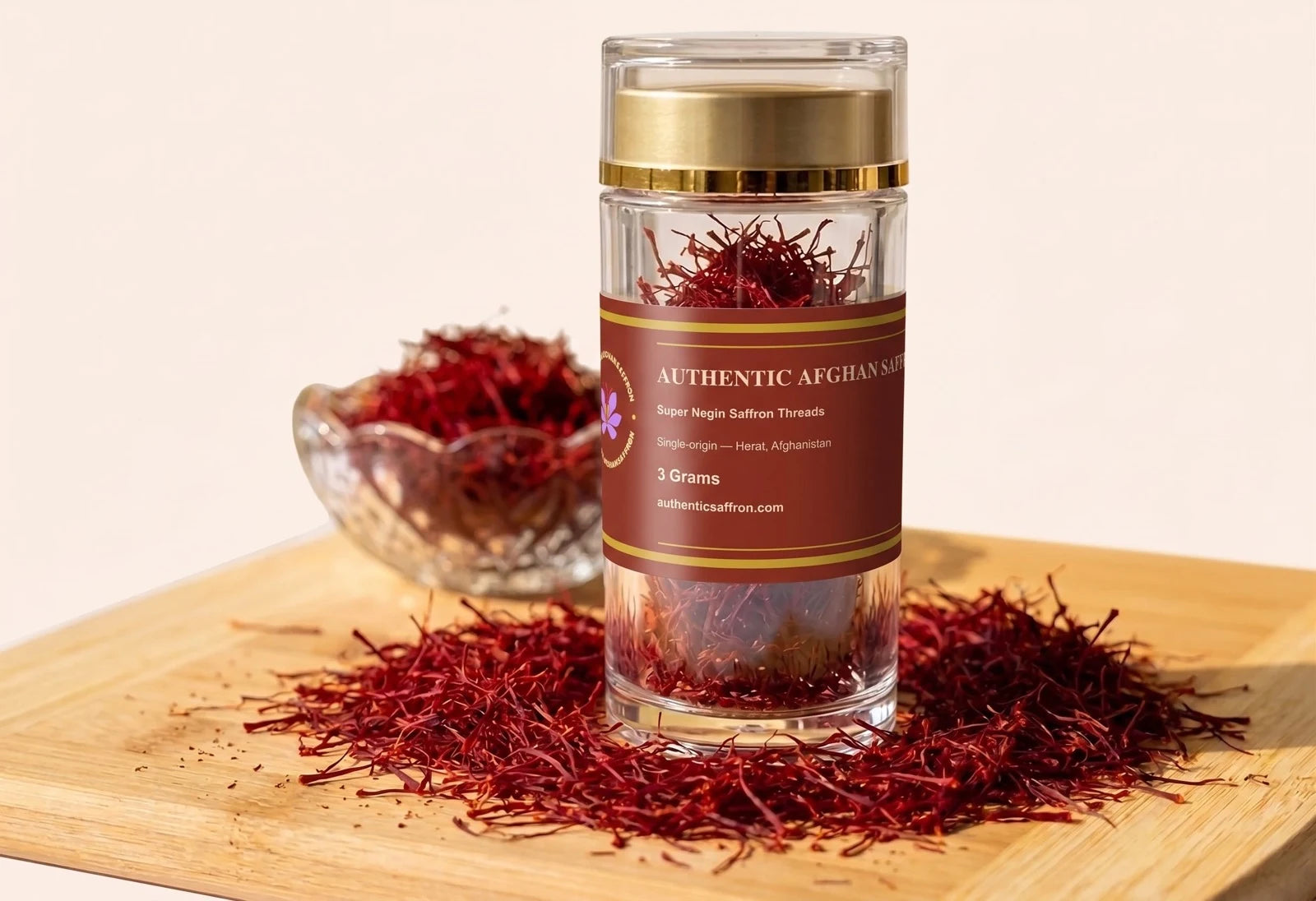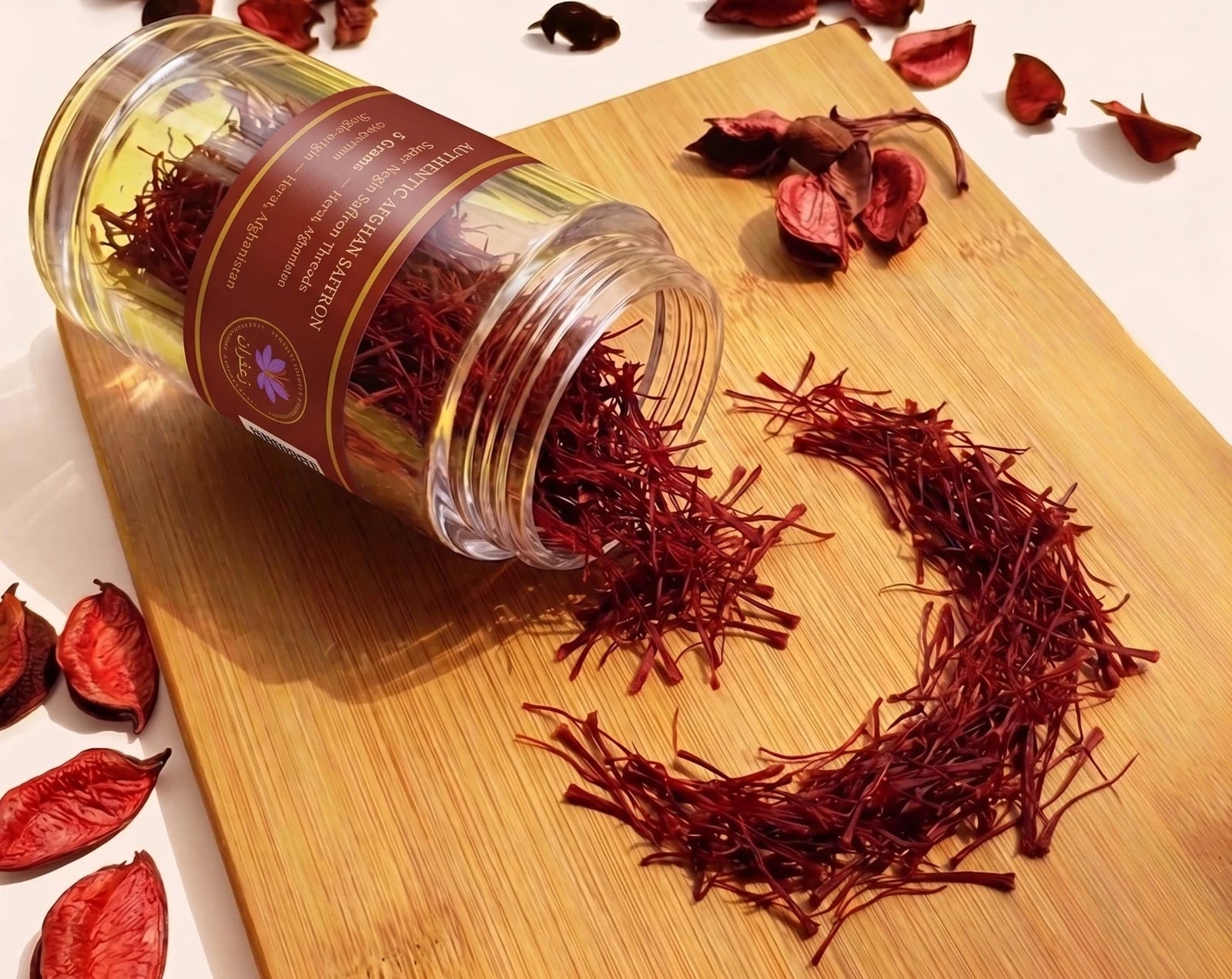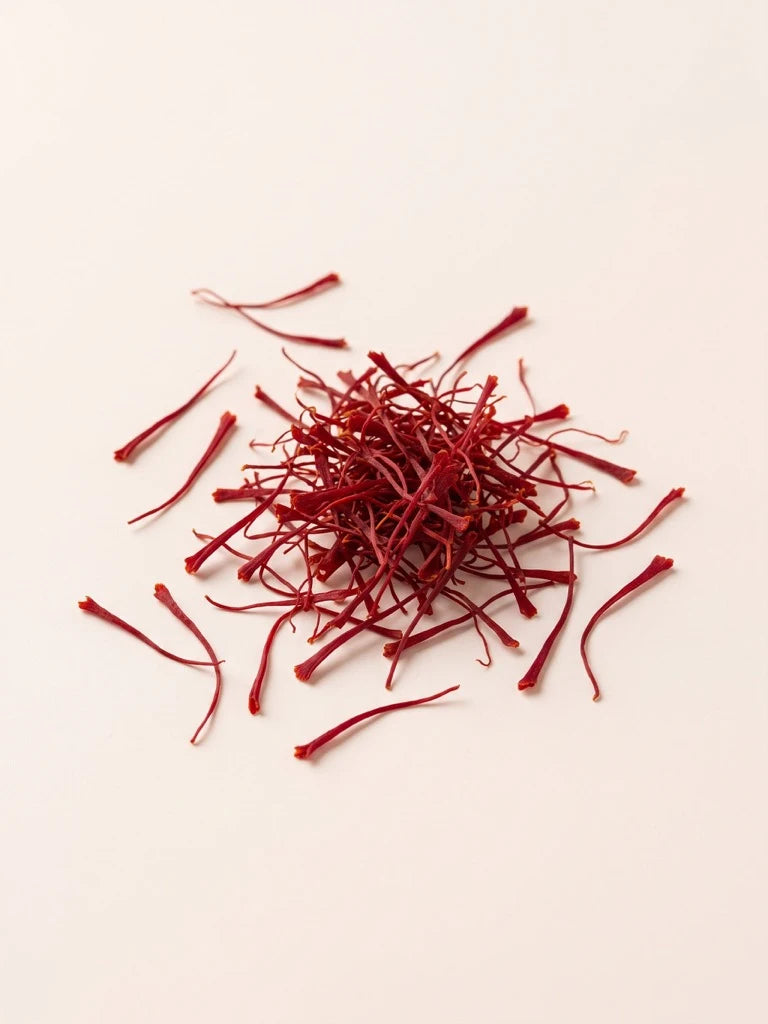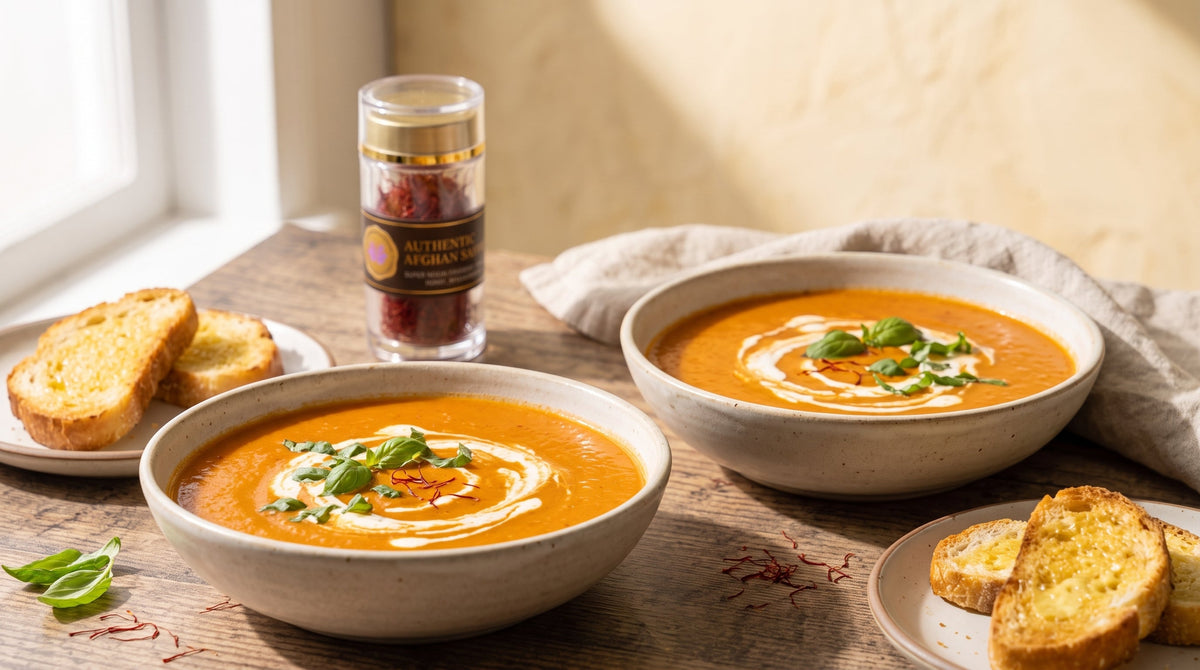
Bisque properly means a shellfish soup, but the word drifted long ago. Treat this saffron tomato soup as a bisque in the modern sense: 35 threads (0.14 g) bloomed in warm cream, canned tomatoes reduced hard, and enough butter to stop the acid fighting the spice.
Tomato and saffron is not an obvious pairing, and anyone who says otherwise has probably not tasted the version that goes wrong: tinned tomato with a faint chemical note behind it.
Get it right and you have the most interesting bowl of tomato soup in the house. The difference comes down to acid management and to what you bloom the threads in.
Why does saffron work with tomato?
It works conditionally. Tomatoes are acidic — most canned varieties sit near pH 4 — and sharp acid is where saffron performs worst. Squeeze lemon over a bloomed thread and the aroma closes down. That is the problem this recipe is built to solve.
Three things solve it. Reducing the tomatoes for half an hour drives off the raw, volatile edge and concentrates their sweetness. Butter and cream give the fat-soluble aromatic compounds somewhere to sit, insulated from the water phase where the acid lives. And blooming the saffron in cream rather than water means it arrives already dissolved into fat.
The payoff is worth the fuss. Tomato soup usually gets its lift from basil, which is bright but obvious. Saffron works underneath instead, giving the soup a warm, slightly honeyed depth that most people cannot name and everybody notices. There is more on which partners help and which hurt in saffron pairings.
How many saffron threads, and bloomed in what?
Thirty-five threads, about 0.14 g, for four to six bowls. Slightly more than a soup this size would normally take, because the tomatoes and the cream both work against you: the acid suppresses the aroma and the fat rounds it off.
Bloom in cream. Warm 1/2 cup of heavy cream in a small saucepan to about 150°F (65°C) — steaming, no movement on the surface — then pour it over the threads and cover the bowl. Twenty minutes. Never let the cream simmer while it heats; it catches on the base of the pan and the burnt note carries straight into the soup. Boiling would also cost you the aromatics, which is the whole reason for the low temperature.
The cream goes pale gold rather than the deep amber a water bloom gives; the fat scatters light differently. Judge it by smell instead. Threads that give you nothing after twenty minutes are old, and no quantity fixes that — see our notes on keeping saffron.
What goes into the bisque?
- Two 28 oz (794 g) cans whole peeled tomatoes, with their juice
- About 35 saffron threads (0.14 g), plus a few extra to finish
- 1/2 cup (120 ml) heavy cream, plus 2 tbsp to serve
- 3 tbsp unsalted butter
- 1 tbsp olive oil
- 2 large shallots, sliced thin
- 3 garlic cloves, sliced
- 1 tbsp tomato paste
- 1 tsp granulated sugar
- 2 cups (480 ml) chicken or vegetable broth
- 1 bay leaf
- Pinch of cayenne
- Fine sea salt and freshly ground black pepper
- Croutons fried in butter, to serve
How does it come together?
- Bloom the saffron in cream. Warm 1/2 cup of cream in a small saucepan over low heat until it reaches about 150°F (65°C) and steams, with no bubbles. Pour it over the threads in a small bowl, cover, and leave for 20 minutes. It should smell of hay and honey by the end.
- Crush the tomatoes. Tip both cans into a large bowl and break the tomatoes up with your hands into rough pieces, keeping every drop of juice. Hand-crushed tomatoes reduce more evenly than blitzed ones.
- Sweat the shallots. Melt 2 tablespoons of the butter with the olive oil in a 5 quart pot over medium-low heat. Add the shallots and a pinch of salt and cook for 8 minutes until soft and translucent, with no colour at all.
- Cook the tomato paste. Add the garlic and tomato paste and stir for 2 minutes, until the paste darkens from red to brick and clings to the base of the pan.
- Reduce the tomatoes. Add the crushed tomatoes, sugar, bay leaf and broth. Bring to a simmer and cook uncovered for 25 to 30 minutes, stirring now and then, until the volume has dropped by about a quarter and the sharp canned smell has gone. This step is what makes the saffron possible; do not cut it short.
- Blend it smooth. Fish out the bay leaf. Blend with an immersion blender for 90 seconds, or in a countertop blender in two batches, filling the jug no more than halfway and holding the lid down with a folded towel. For a true bisque texture, push the soup through a fine sieve afterwards.
- Add the saffron cream. Return the pot to low heat and stir in the bloomed cream with its threads and the last tablespoon of butter. Warm it through for 3 to 4 minutes but do not let it boil — cream and hot tomato acid will split if you push them.
- Season and serve. Season with salt, black pepper and a pinch of cayenne. If it still tastes sharp, whisk in another knob of butter rather than more sugar. Swirl the reserved cream over each bowl, crumble two or three dry threads on top and add the croutons.
Where does tomato bisque go wrong?
Under-reducing. Twenty-five minutes is the minimum, and you are watching for the smell to change, not the clock to run out. A soup that still smells like an open can will taste like one, and the saffron will read as an odd note on top.
Splitting. Cream curdles when it meets hot acid too quickly or boils in it. Bloom in cream, add it off a hard heat, and never bring the pot back to a boil once it is in. If it does break, blend it hard for a minute and it will usually come back together.
Reaching for sugar. A teaspoon balances the tomatoes; a tablespoon turns the soup into a sauce and flattens the saffron completely. Butter fixes sharpness better than sugar does and leaves the aroma alone.
Filling the blender. Hot soup expands violently and blows the lid off. Half full, lid held down with a towel, and start on the lowest speed.
And scattering dry threads into the pot at the end. Whole threads dropped into finished soup have no time to give anything up, so you get red specks and nothing else. That is a garnish, not a seasoning. The method is set out in how to bloom saffron properly.
Frequently asked questions
Will an immersion blender give a smooth enough soup?
Close, but not identical. A stick blender leaves a slightly grainy body from the skins and seeds, which some people prefer. A countertop blender gets closer to velvet, and a fine sieve afterwards gets you the rest of the way. Skip the sieve and nobody will complain.
Can I make it dairy-free?
Yes, with full-fat canned coconut milk. It has enough fat to carry the saffron and it behaves well against the acid, though it brings its own flavour and pairs better if you drop the cayenne. Oat and almond creams are the ones to avoid; they are low in fat and they split in tomato.
Is it worth roasting fresh tomatoes instead?
In late summer, yes. Use 3 lb of ripe tomatoes, halve them, toss with olive oil and salt and roast at 400°F (200°C) for 45 minutes until the edges char, then continue from the shallot step and cut the broth to 1.5 cups. Out of season, good canned tomatoes beat mediocre fresh ones every time.
How long does the bisque keep?
Four days refrigerated, reheated gently and stopped short of a boil. It freezes for three months, though the cream can look grainy on thawing; blend it for thirty seconds and it comes back. Expect the aroma to fade in the freezer even when the colour holds.
Read next
- Saffron focaccia to tear into the bowl instead of croutons.
- Saffron compound butter — the fastest way to finish a soup with threads.
- Our saffron, and how the threads are cut and sorted.
- Saffron red lentil soup for a thicker, spicier pot on a weeknight.